Tuesday, August 31, 2010

Iridescence above a storm at sunset

web_widestorm_stormsunsetwork_0153_2881
On Aug. 6, there was a significant thunderstorm on the western horizon. I was at work for this. It was late in the day, so the sun was setting behind a large anvil, and rays of light escaped from the top.

web_wispycolorcloud_stormsunsetwork_0149_2880
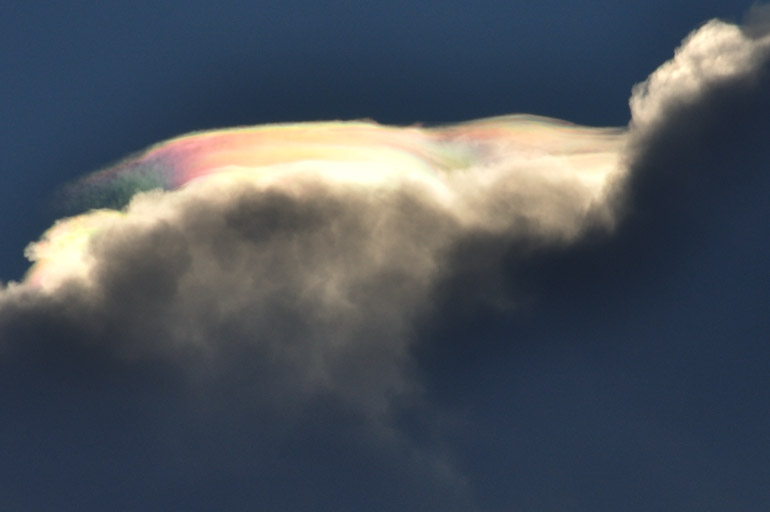
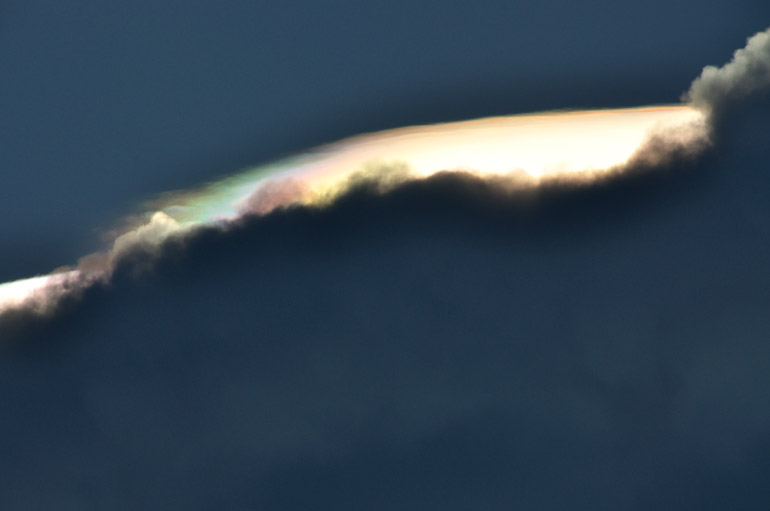
A colorful pileus formation appeared when sunlight filtered through moisture at the top of the cloud.

web_widecolorcloud_stormsunsetwork_0145_2879
Here's more of a close-up of the wispy, iridescent clouds.

web_closecolorcloud_stormsunsetwork_0145_2879
The iridescence was fleeting, and the storm itself only brushed Brevard County's western border. Melbourne didn't see a drop of rain that day, though conditions have been a little wetter here more recently.

Friday, August 20, 2010

An Atlas V sunrise

web_birdfocus_atlasvsunrise_0338_2857
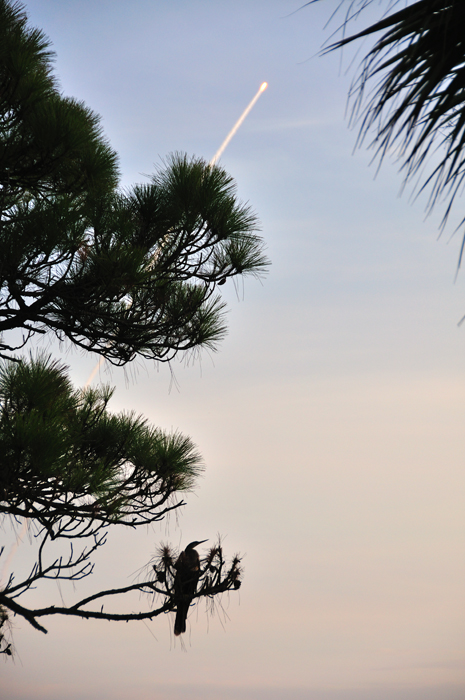
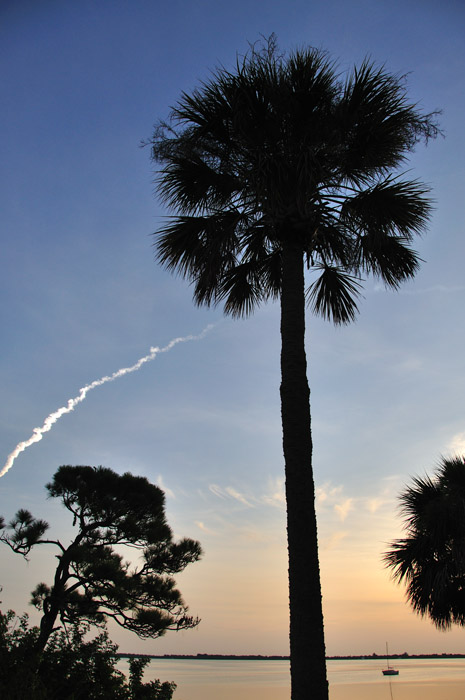
Not able to travel northward to get closer to Launch Complex 41 at Cape Canaveral Air Force Station, I drove five minutes to the Indian River in northern Melbourne and snapped a few shots of the liftoff. An anhinga, a water bird similar to a cormorant, was perched in a pine tree in the foreground.


I hate early mornings. I've been working nights for more than three years now. I hate waking up on a schedule. Unless it's for golf. Or a rocket launch.

On Saturday, it was both.

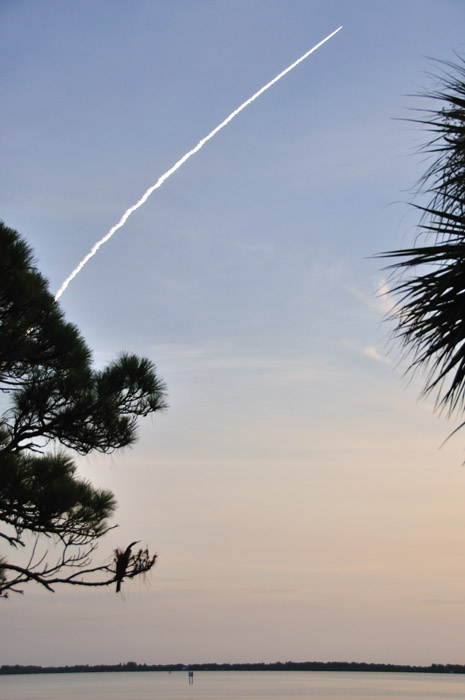
I was set to leave my apartment around 7:15 a.m. for a tee time on a beautiful links course in St. Cloud, which is outside Brevard County lines. But before the hourlong trip to the state's center, an Atlas V rocket lifted off at 7:07 for the first time with three solid-fuel boosters. That made the craft leave a smoke trail as it swiftly lifted toward the heavens to deliver a military communications satellite.

It was the first launch from the Space Coast since the Falcon 9 test flight way back on June 4.


web_rocketfocus_atlasvsunrise_0345_2858
Because of thick, thorny, snake-infested brush between me and the river and because of the clothes I was wearing -- shorts and sandals -- I could not get close to the water. I know; I'm a wimp.

web_palmboat_atlasvsunrise_0353_2859
Remnants of the contrail linger 15 minutes after the sun rose. The launch was successful.

web_sunrise_atlasvsunrise_0355_2860
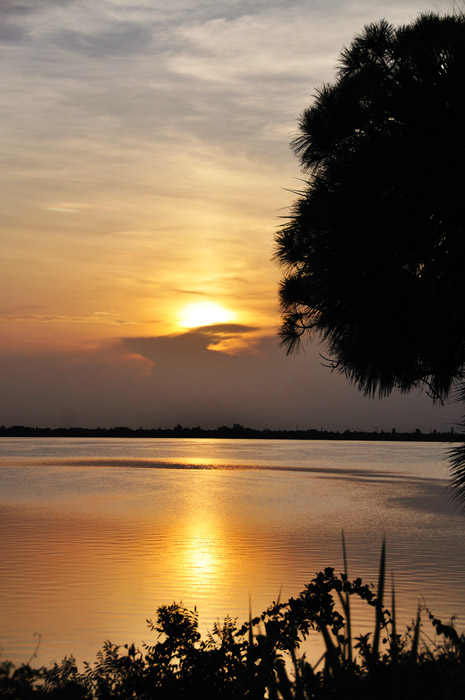
No rocket here, just the sun: one last photo before the golf trip.

Tuesday, August 10, 2010

The Milky Way in Florida? No way!

best_0080 copy2
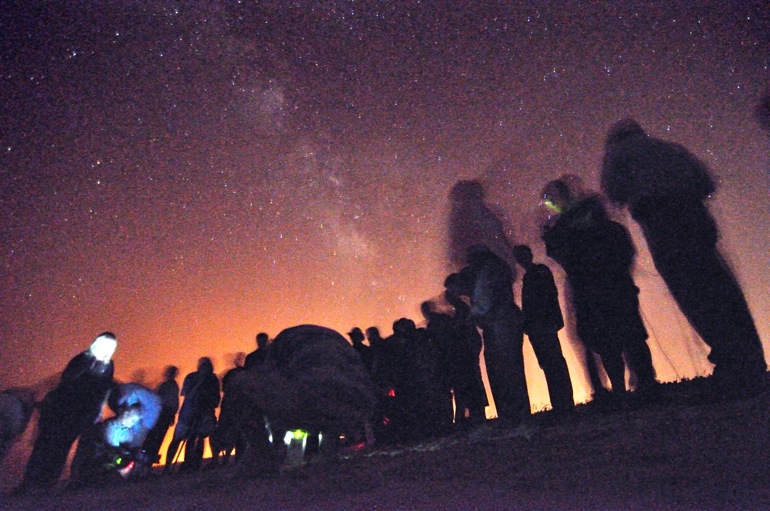
Despite considerable ambient light on the horizon, the Milky Way Galaxy (see it better here) is visible behind the wildlife officials and journalists participating in the release of some of the turtles rescued from the Deepwater Horizon oil spill. It was the first time I had seen our little band of stars from a location in Brevard County.


One of the biggest shortcomings of the Space Coast -- aside from its lack of lightning bugs, fall foliage, rugged terrain -- is the ambient light that blocks a view of the heavens.

During my childhood in Maine -- especially if I'd had a rough day -- I would walk outside my house and onto the dock over the lake and lie with my back on the sun-bleached 2-by-4s that seethed with water spiders. And I would stare at the stars.

The billions of stars.

And not a light in sight. No revving car engines, only hollering loons. Fish jumped and splashed down under the veil of darkness. I'd fight off mosquitoes and black flies, but it was worth it: just to look up and wonder, and to gasp in awe of a meteor. I couldn't blink. I couldn't miss anything.

Here, the stars seem countable. The city lights are just too much.

That's why last Monday's work shift was the best I've yet had here in Florida. Not because the story itself was amazing or exciting or especially ruthless and bloody, but because the setting reminded me of a better place. Despite the day's lousy ending and the ensuing lousy week, it made things bearable.

The assignment entailed a late-night excursion onto Canaveral National Seashore, a federal park that's closed to the public after 8 p.m. in the summer. The road to it is gated, and the beach itself is fenced off near Kennedy Space Center. But journalists were invited at 10 p.m. Monday to witness the release of hundreds of baby sea turtles relocated (via FedEx) from the Gulf of Mexico, where they would have been threatened by the oil spill.

From the outset, the assignment was pretty cool. (There's not a more apt descriptor than "cool," is there?) A park ranger blinked a flashlight at my car as it approached the gate. He checked my press badge and let me through. The next few miles of road meandered through the brackish marshes of northern Merritt Island.

I passed Kennedy Space Center's two shuttle launch pads and the Vehicle Assembly Building, its NASA "meatball" logo and its giant American flag bathed in white light.

Eyes glimmered in my headlights. In Maine, that means there's a deer, a moose or a bear up ahead. Here, it means there's an alligator up ahead. It crawled off the pavement.

Bugs -- basketball-size mosquitoes and behemoth moths -- collided with my windshield. My car got low on washer fluid.

As a regular thing, when I step out of my car at night, I first crane my neck backward and look at the sky. But when I parked at the seashore's Playalinda Beach -- notable among locals as a nudist attraction -- I saw something I had never seen here. At first, I thought it was a ribbon of thin clouds that stretched from the southwest horizon to the northeast horizon. But it wasn't moving.

It wasn't cloud cover. It seemed foreign.

It was foreign. It was downright extraterrestrial.

It was the Milky Way.

The stream of stars making up our spiral galaxy flowed from the mainland and emptied into the Atlantic Ocean. Only when I drove through the Keys last year had I seen this in Florida. Spotting it requires a dark sky.

On the beach, reporters and photographers from TV stations and newspapers -- including The Times of London -- watched turtles scamper to the ocean. They listened to biologists talk about the chances that this would work out for the baby critters. But I stood away from the crowd. I crouched, planted two knees into the sand and looked at the stars above the hubbub.

Then, a shooting star. And I made a wish: I wanted a tripod. I wanted to shoot the biologists and journalists focusing on the ground -- with the real star of the photo being the Milky Way in the sky behind them.

But as a rule, my wishes just don't come true, so I improvised. I planted my notebook into the sand, then set my camera on top. That stabilized my Nikon, then I boosted the ISO setting to make the shutter speed as quick as possible: four seconds. The resulting shots weren't technically awesome, but I didn't much mind. It's one of those sights that can't be shown through a lens anyway. I conveyed my enthusiasm and my observations in the article:

Our Milky Way Galaxy formed a spine of stars stretching across a clear sky -- a rare site for amateur astronomers here. A half moon had not yet risen. Twenty miles to the north, New Smyrna Beach glowed orange. To the south, the lights of Launch Complex 41, where Atlas V rockets lift off, were dim. Lightning intermittently flashed on the western horizon.

"This is one of the darker beaches on the East Coast," Jane Provancha, the NASA-contracted biologist supervising the effort, said as bats and mosquitoes battled over her head. "You can see with the night sky how really wonderful it is." (Full story)

I could have taken more time to gawk at the heavens, but I had to leave and pick up a cell phone signal somewhere back in civilization so I could file a story. When I was typing on my laptop while parked at a 7-Eleven back on the mainland, a minivan hit and crumpled my car's rear fender. $1,000 in damage. It was my first accident, though it was a lame one.

But it didn't bother me. I saw the sky and remembered what I had seen. I'm simple enough a person to know that no matter where I am on Earth, I can look up, forget and be happy.

Friday, July 30, 2010

My Harley, my iPhone and the full moon

anti
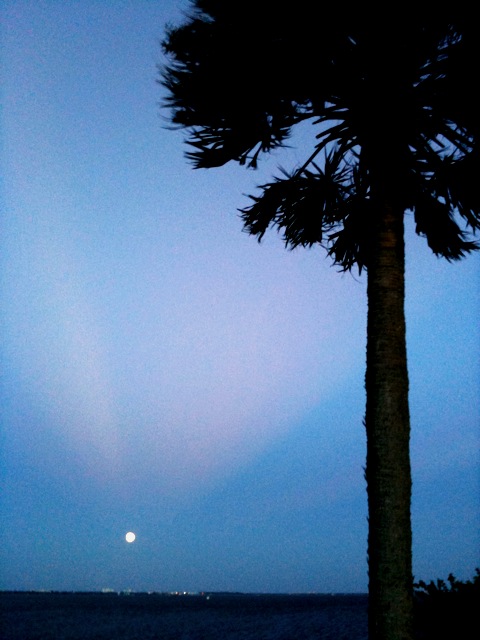
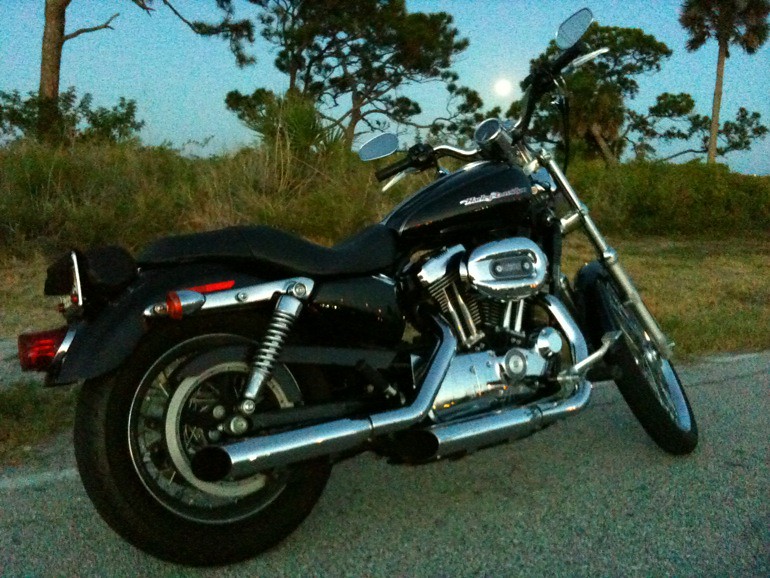
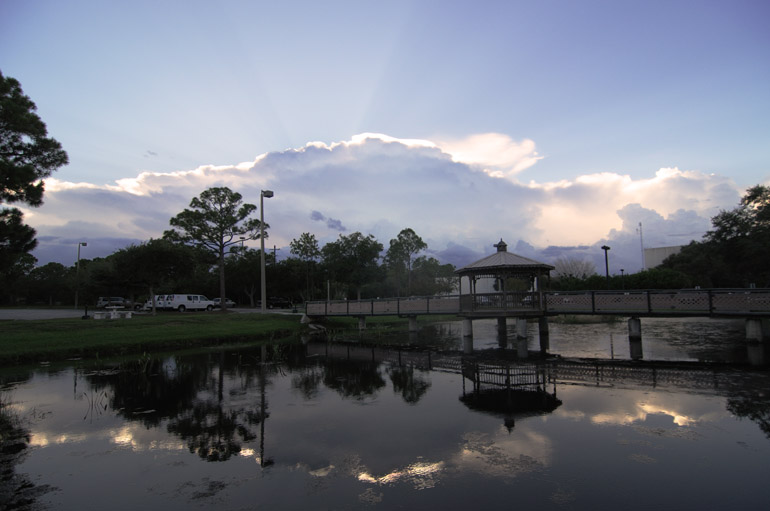
The Harley-Davidson and I ventured out for a moonlight ride Sunday evening, leaving the sissy bar and its cargo capabilities behind. I toured most of Brevard County, which didn't take long because I was averaging 90 mph. But I felt naked without my camera, a condition I regretted when the sun went down and I was equipped only with a cell phone camera. As our star dipped below the western horizon, our satellite rose in the east. Two phenomenons collided, though, as anticrepuscular rays (sunlight that appears to be emanating from the eastern sky at sunset) seemed to be shining from the full moon.

bike2
My mode of transportation is pictured along Pineapple Avenue in northern Melbourne, a roadway that parallels the Indian River.

sea
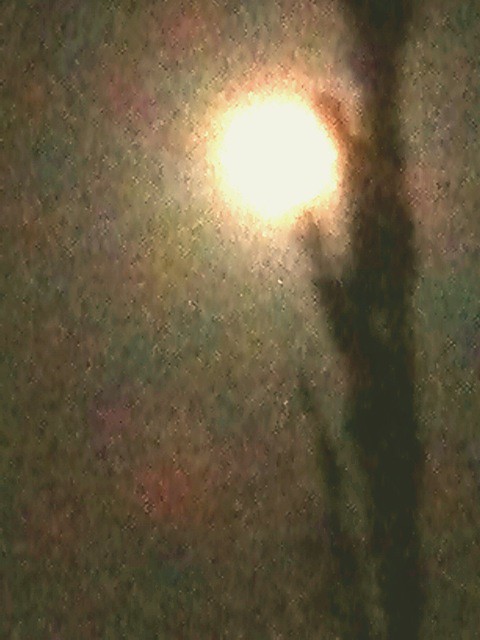
Night exposures with an iPhone aren't easy -- and aren't that pretty either. This was one of about 10 shots I took of a stand of sea oats as they blew in the breeze along Cocoa Beach. It's so grainy that it almost looks like a bad painting.

river
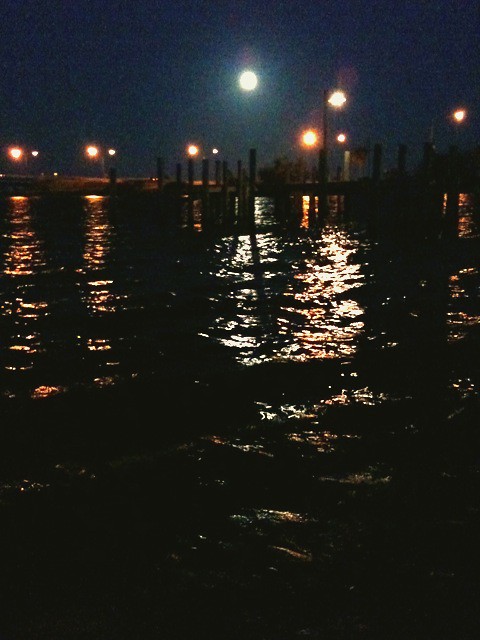
Another of the moon near the Eau Gallie Causeway in Melbourne. And to address the reason why I haven't been taking thunderstorm photos this summer, read this.

Tuesday, July 13, 2010

A minor-league Fourth of July

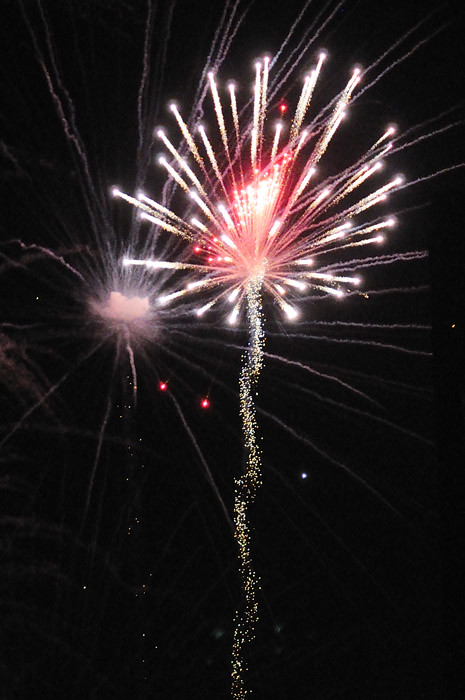
web_fireworks_blast_0042_2854
I liked the smoke trails in this more than anything.


Instead of taking in one of the major fireworks displays on the Space Coast this Independence Day, I went with a few friends to a Brevard County Manatees minor-league baseball game, after which a show was scheduled to promptly take place.

The game was rained out because Mother Nature decided to be uncooperative for the first time in the entire summer. Cracker Jacks were abandoned. Mitts were stashed. Beer sales ended. Much to our delight, however, the announcer at Space Coast Stadium told us every 10 minutes that the fireworks would be shot up within the next 10 minutes.

We waited 10 minutes, and we waited 10 minutes, and so on and so forth. Delight became rage.

Ballpark staff members entertained the children by hurling various things -- oversize T-shirts and bags of non-trans fat potato chips -- into the rain-drenched stands. (How ironic, right? They don't want the kiddies eating trans fat, but here, have a Triple XL shirt because it's the only thing that'll fit you. Makes sense.)

I entertained myself by rapidly firing my camera flash at the woman who danced to "Y.M.C.A." in front of me (she was mentally deranged and likely intoxicated, so she did not mind, rather thought she was a disco star). Craning my neck backward, I looked straight up into the mist that floated on a tortuous path to the earth, which made it look like snow, which reminded me of a better place: Maine.

Then, a countdown. From 20. In a piercing, high-pitched voice. ... Talk about torture. I'd rather be waterboarded.

But then it was time. "3 ... 2 ... 1 ... blastoff." Silence. No blastoff. More bags of chips. More T-shirts for the fat kids.

Six 10-minute warnings later, ineptitude reared its ugly head again when the pyrotechnics crew finally started blowing up the rockets -- directly behind us, where we couldn't see them well. Mind you, the Manatees belong to the Florida State League as a Single-A affiliate of the Milwaukee Brewers -- small peanuts, really. And again, this is Brevard County, which says a lot in and of itself. They don't call its premier city "Melboring" for nothing. So we really shouldn't have expected more.

I took three photos, and I think that's overkill.


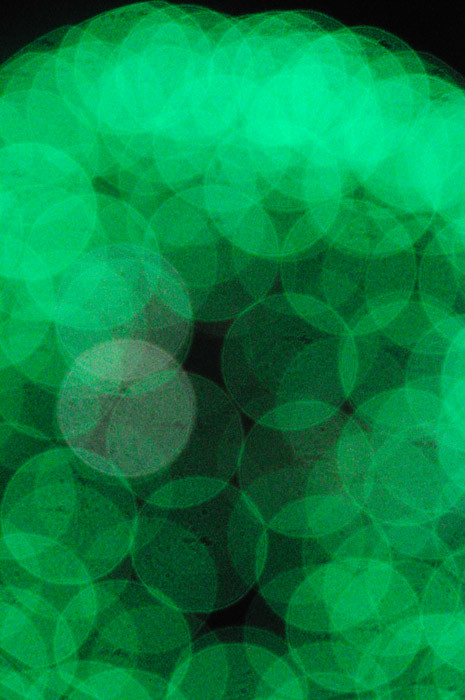
web_bokeh_fireworks_0057_2855
This shot accentuates the bokeh, or out-of-focus points of light. In this case, they're green sparkles.

web_jake_fireworks_0067_2856
A friend's 3-year-old, Jake -- a.k.a. Jacob, a.k.a. Jakers, a.k.a. Mermaid Boy -- covers his ears because they were cold, or something.