Friday, March 5, 2010

The week of the streak: a Delta IV rocket launch and an ISS flyover

web_delta4launch_smoky_0007_2569
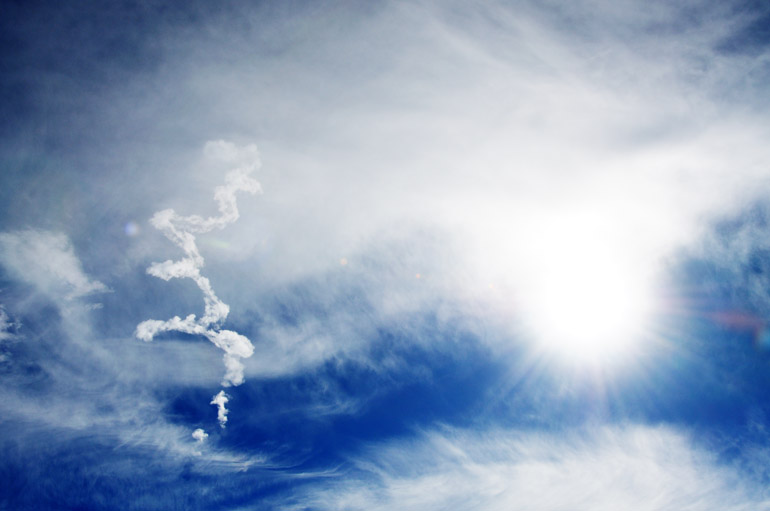
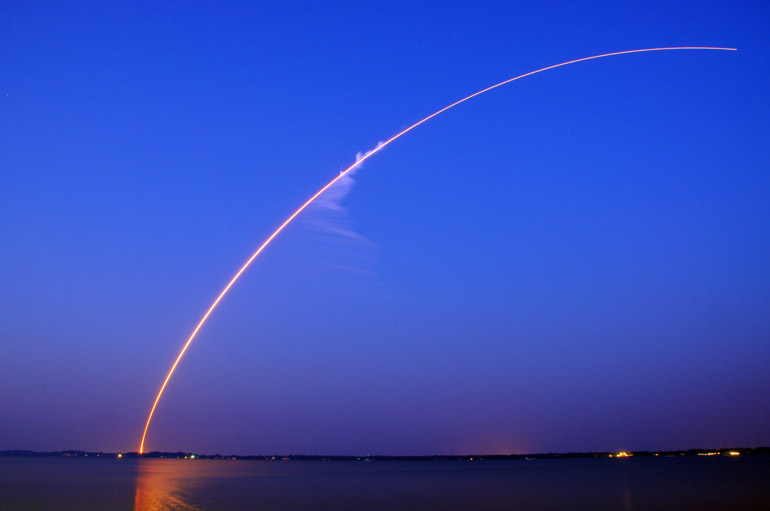
Purchase a print | With traces of sunlight still bouncing off particles in the atmosphere, a sky-blue color lingered for the duration of this 3-minute, 40-second exposure of a Delta IV rocket launch Thursday. Liftoff was at 6:57 p.m., with sunset at 6:25 at this location along the Indian River in Palm Shores. There was also wildfire smoke drifting over the water. More about the exposure: the aperture was closed to its smallest, f/22, and the ISO was on its lowest, 100.


Posting on The Offlede has been sparse recently, mostly because I've been tending to the aspects of my life that I've neglected in the past year. The utmost of these, in no particular order, are books, family and country music. Another, baseball, will lead to a few posts in the coming weeks, as spring training is now in full swing. Unfortunately, my Harley-Davidson will continue to get the cold shoulder if this frigid weather persists.

This post, though, has a theme: streaks of heavenly - or soon to be heavenly - light.
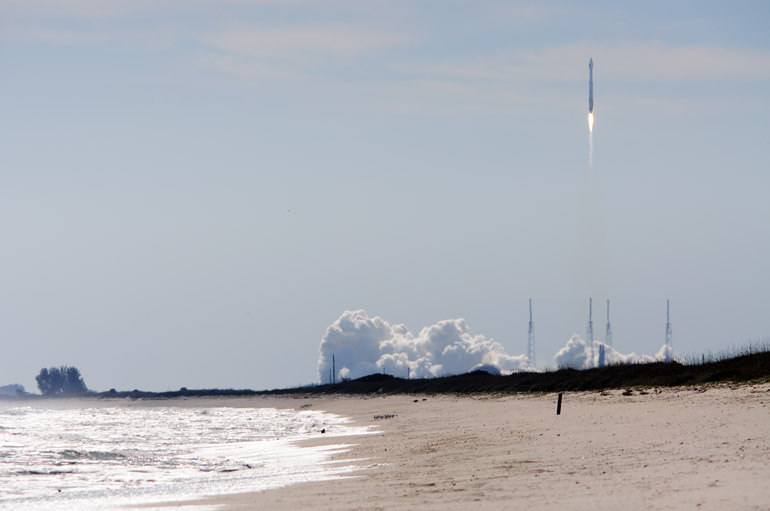
web_geese_rocketwait_0005_2567First, let's start with the last event of the week: the launch of a Delta IV rocket carrying a weather satellite to be used by the National Oceanic and Atmospheric Administration. TV news and National Weather Service meteorologists will employ images from this GOES-P (which has induced many urinary snickers in the newsroom over the past week) satellite in devising forecasts.

Flying in the medium configuration with two solid rocket boosters - which provide more flame, exhaust and ascent force than a bare rocket - the vehicle was expected at 6:17 p.m. Thursday to make an arc of contrail that would be lit up by the setting sun. But a strong wind pushed back that attempt to 6:57 p.m., with dusk befalling the Space Coast. I determined that it was dark enough to attempt a long exposure of the rocket's flame arcing over the Indian River, near my workplace.

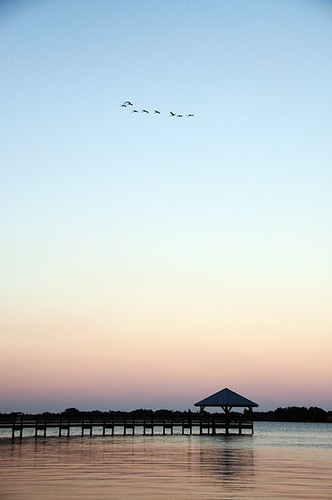
(The image at left shows the lighting conditions at 6:17 p.m., as a V of geese flies north just before sunset. That first launch time also would have made for an interesting shot, though the amount of sunlight ruled out a long exposure.)

Adding a splash of uniqueness to this launch was the smoke from a wildfire in Palm Bay, about 20 minutes to the south. It hung in the air like a light fog or a thick smog on a hot day. Conditions were otherwise clear and cold, like they have been for most of this odd Florida winter.

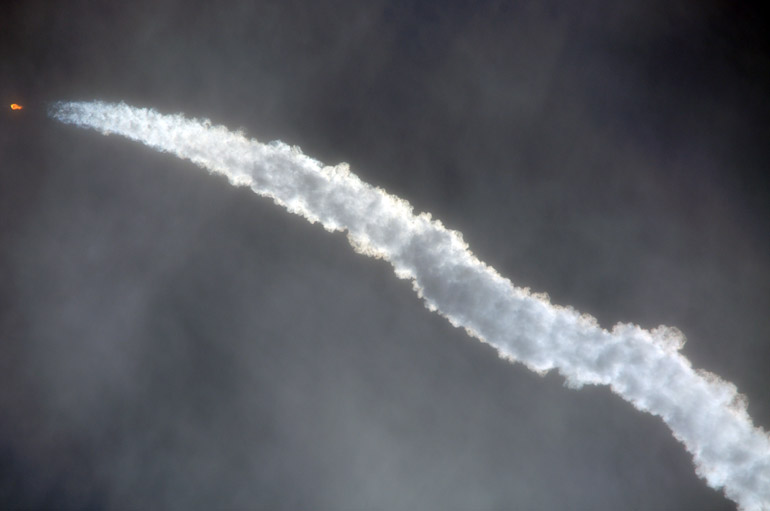
Over 3 minutes, 40 seconds, this exposure shows a blue sky and a redder than normal flame trail from the rocket - redder than normal because of the smoke. This was my second nighttime Delta IV launch from this riverside location, so I knew exactly where to point the camera, resulting in a nicely framed, 18mm shot. (For my first time, I zoomed in too closely and cut off the arc.)

web_spacestation_pineda_0022_2565
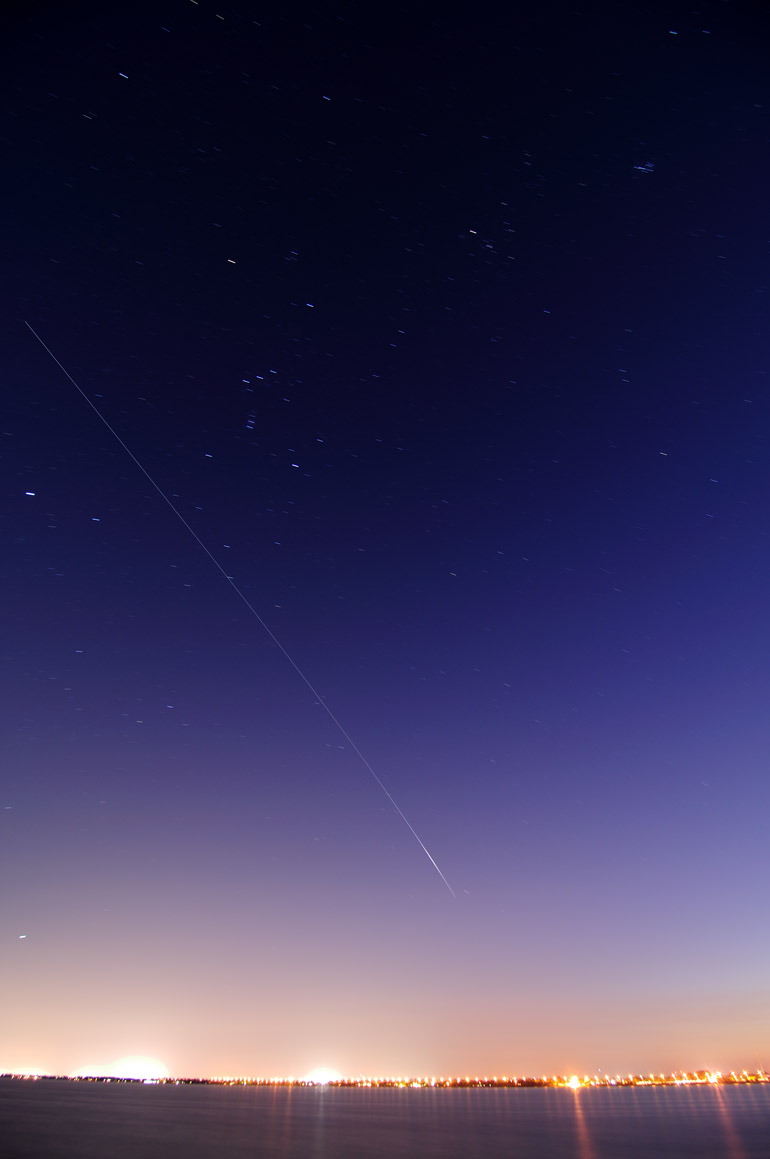
For some reason, the sunlight reflecting off the International Space Station shined more brilliantly at the very beginning of the flyover. Typically, the station's glow grows in intensity as it gets higher in the sky (in this case Monday, its apex was 54 degrees in relation to the horizon).


In the other streak this week, the International Space Station cut through the sky Monday evening, taking about four minutes to cross from the southwestern sky to the northeastern horizon.

The exposure I made of the flyover is the longest I've yet to attempt: 2 minutes, 20 seconds, more than half of the station's appearance. Unlike a rocket and shuttle engine, the reflecting sunlight off the space station is dim - more like a bright, slow-moving star. Such a faint point of light requires a wide aperture so that the camera takes in enough light to register on its sensor. Got it?

My fear while the shutter was open so long at f/4 was that the image would come out overexposed, especially from the ambient light along the Indian River in Palm Shores. That didn't happen. But the result was the light from the dusky sky overpowering the streak from the space station. That's why it's rather difficult to see in this image, which is rather unremarkable.

Thursday, February 25, 2010

Big birds of Viera's man-made wetlands

web_craneclose_wetlands_0025_2549
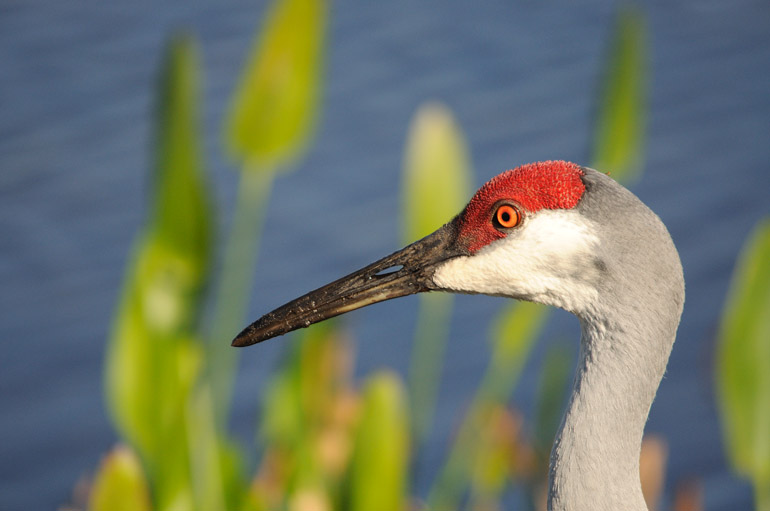
In the past several weeks, while running errands, I've stopped by Viera's Ritch Grissom Memorial Wetlands a few times on a whim. It's conveniently located near many of the stores in Viera that I frequent, so taking a slight detour through the wetlands to see what's flying around on a particular day is not much to ask. After all, I always have my camera with me, and one never knows what critter will make itself visible, even during the briefest of visits to such a wildlife refuge. On one of those days, a sandhill crane landed on the bumpy dirt road in front of me.

web_cranedrops_wetlands_0017_2548
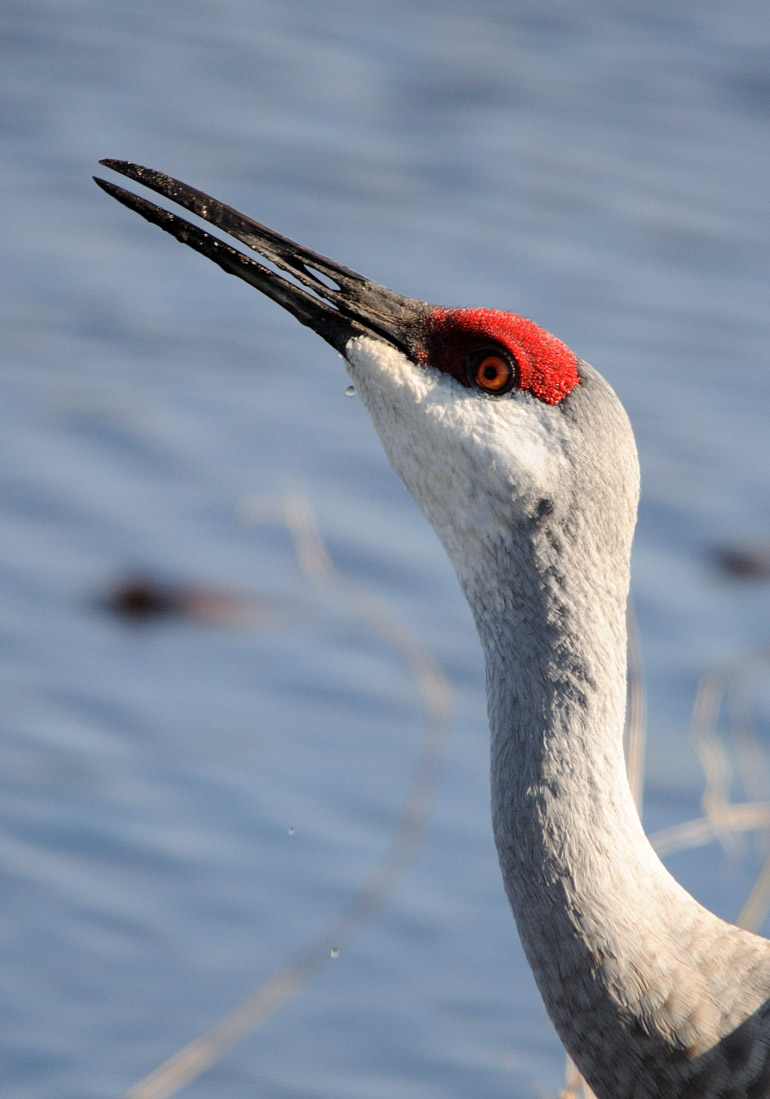
The crane made its way to the edge of the water, where it browsed for food.

web_heronhair_wetlands_0062_2550
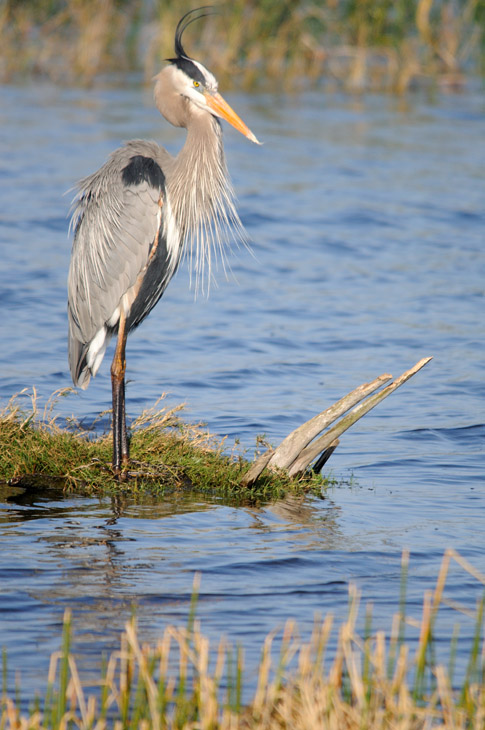
Another common, large bird at the wetlands is the great blue heron. This one was having an Alfalfa-style hair day.

web_herongold_wetlands_0035_2556
This heron was stalking fish when I visited late in the afternoon, during the golden hour.

web_heronlanding_wetlands_0038_2557
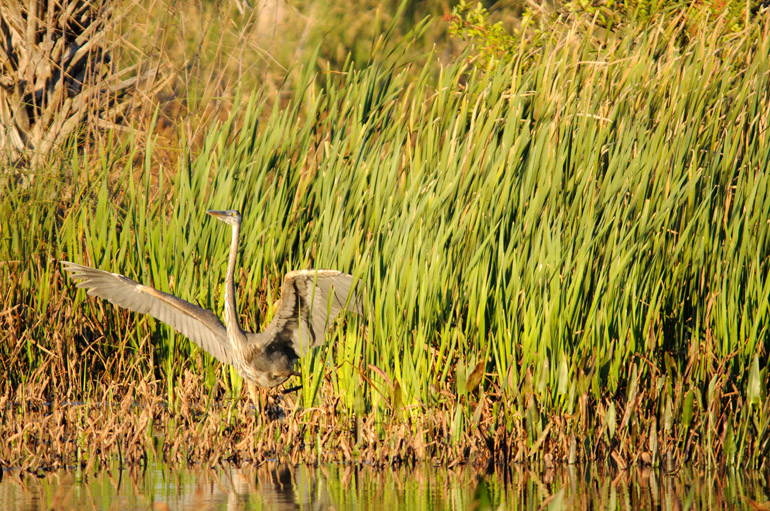
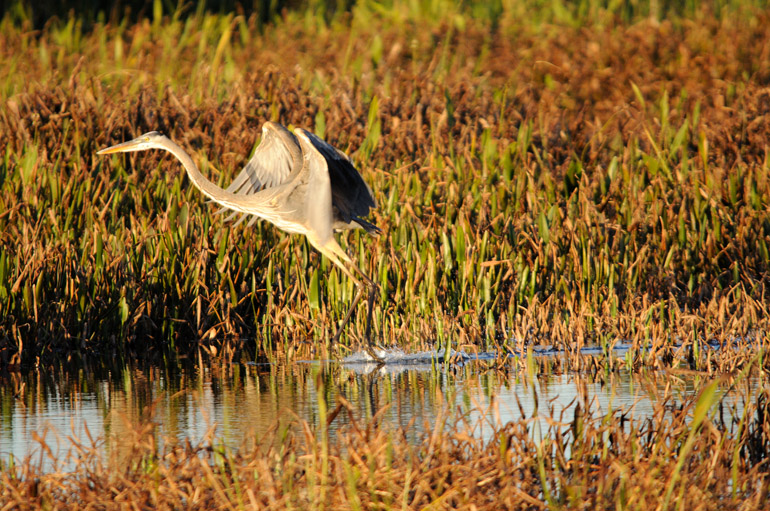
I thought the heron had spotted a particularly large fish. Or, at least, something moved it to fly a short distance, feet skimming on the water's surface, then plop back down into the swampy grass. It caught no fish, though. I guess it was just skittish behavior on account of the photographer pointing a large camera lens in its general direction.

Friday, February 19, 2010

Snow search in Appalachia | A few final shots, from West Virginia's capital

web_capitol_charleston_0004_2551
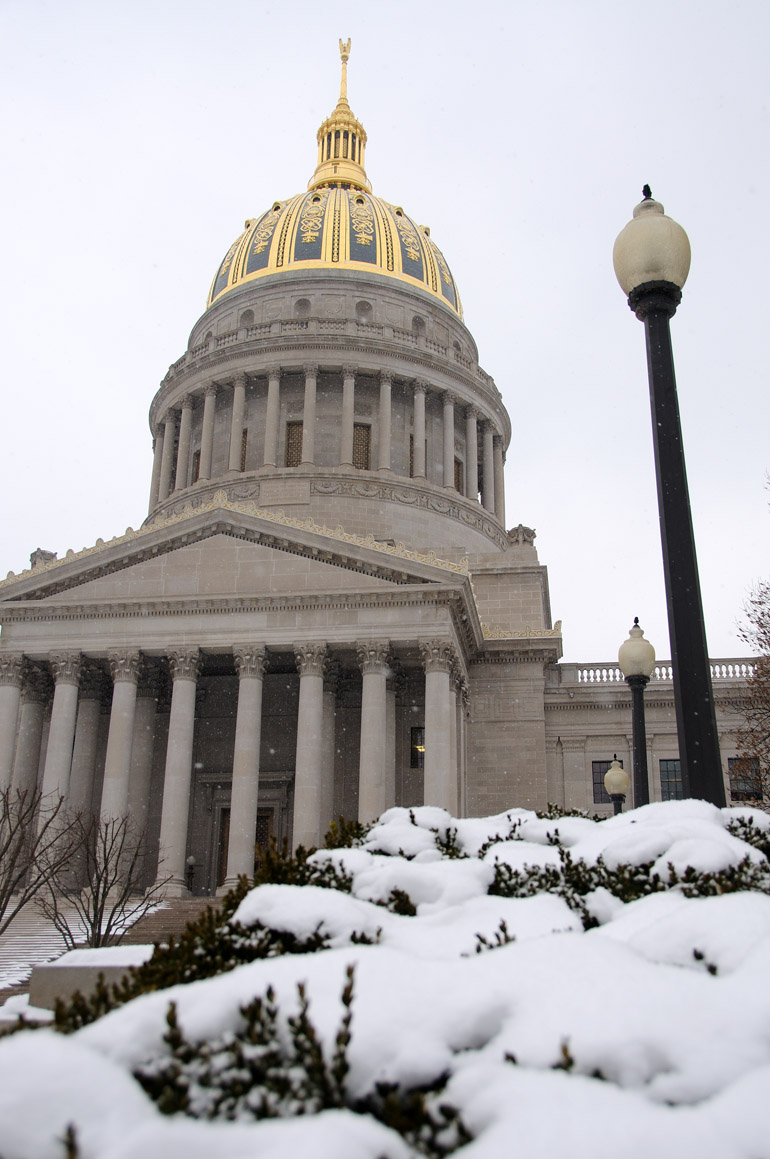
The West Virginia Capitol in Charleston, amid a light snowfall.


When I rolled out of my cheap, cold motel room bed in Charleston, West Virginia's mountain-lined capital city, another light snowfall was coating surfaces outside. But I was disappointed that it wasn't coming down harder. The forecast had called for three inches of snow, and I was hoping that it would thoroughly blanket surfaces by the time I woke up.

On the bright side, traveling was easy. I parked in downtown Charleston and walked around the Capitol complex for a few photos. As in many two-newspaper towns today, Charleston's daily publications - The Charleston Gazette and Charleston Daily Mail - are housed in a single building under a joint operating agreement. They're located in the downtown, just a walking distance to other businesses and restaurants. Such a setup made me miss the urban setting I was accustomed to working in, even at the paper in Maine. In Florida, nothing is within walking distance.

After fueling up on coffee and a sandwich from a popular place in downtown Charleston, Blossom Deli, I embarked on the 12-hour trip home to Florida. The trip, surprisingly, was easy on the gas tank. I can only surmise that the reason I made it from Charleston to Georgia on one tank of gas was because I was going downhill most of the way. Interstate 77 in North Carolina is where the serious descent from the Appalachians takes place. The snow disappeared before the South Carolina border, and the sailing was smooth from there to Melbourne.


web_snowflake_charleston_0015_2552
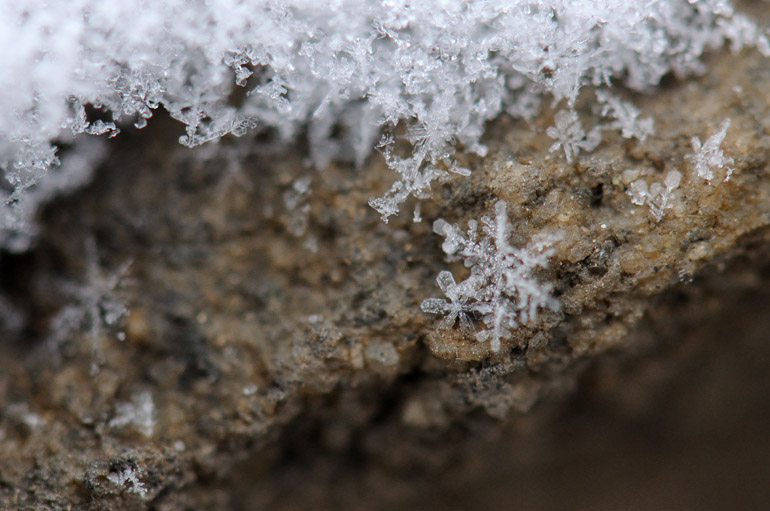
None of the landscapes were that interesting, so I focused my macro lens on a snowflake on the rock wall lining the sidewalk.

web_snowflakeleaf_charleston_0030_2553
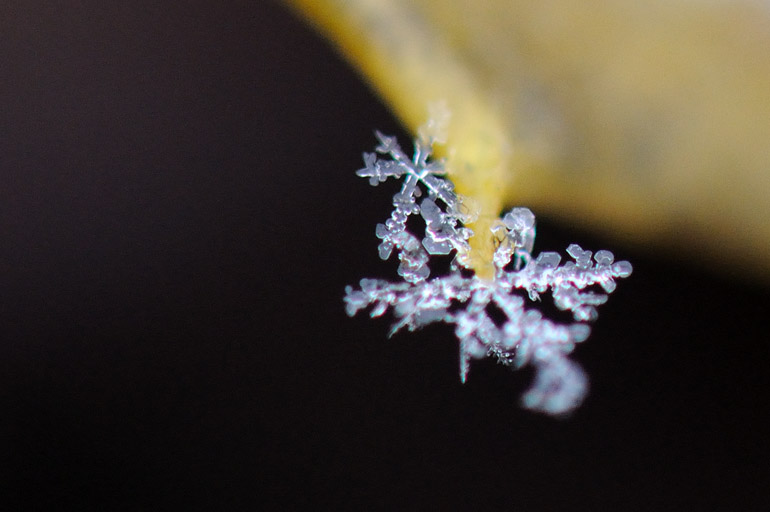
A flake on a leaf.

web_bridge_charleston_0052_2555
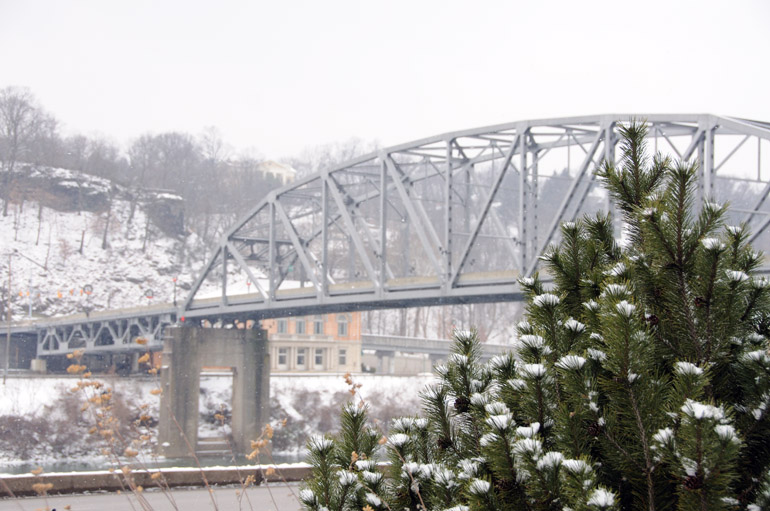
The South Side Bridge, with a train station on the other side of the Kanawha River.

web_bridgetree_charleston_0042_2554
Another view of the bridge.

Thursday, February 11, 2010

Ironically, sun makes photographing launch of solar observatory quite difficult

web_atlasv_liftoff_0082_2559
On the second attempt, the weather cooperated for an Altas V rocket to deliver NASA's Solar Dynamics Observatory into orbit Thursday morning. For the first time, I shot the launch from Playalinda Beach, which is part of the Merritt Island National Wildlife Refuge and is sometimes closed for launches from Cape Canaveral Air Force Station. At five miles, it's the closest that members of the public can get to an Atlas V launch. Beach access nearer the launch pad is restricted, so many people gather near a fence that NASA constructed for the safety of the public. Above, the rocket lifts off. It did not have solid rocket boosters attached, so there is no visible smoke trail. Such configuration also reduces the rumble that observers hear.

web_bluesky_atlasv_0090_2560
Being south of the pad for this 10:23 a.m. launch meant that the sun was shining directly at me. This made exposing the sky and the rocket very difficult. As is the case in all of these photos, the rocket is dark because of the harsh sunlight.

web_contrail_atlasv_0116_2561
As the rocket hit colder temperatures in the atmosphere, a contrail began to condense. This was taken just after the rocket passed in front of the sun, at which time my camera seized up because of an overload of light. As is apparent from this photo, it was impossible to correctly expose the sky and the contrail. But what resulted was an interesting, contrasty shot with only the contrail exposed correctly. The photo also appears monochrome, aside from the rocket engine's flame.

web_suncontrail_atlasv_0126_2562
The contrail dissipates as the sun continues to mercilessly beat down on the beach. It wasn't warm, though: The temperature was about 40 degrees. A 20-mph wind made it feel colder.

web_crowd_atlasv_0130_2563
Photographers gather their equipment after the launch. It wouldn't be difficult to scoot through this fence, but the Air Force mans a nearby watchtower to prevent that from happening - or to punish people who do make that happen.

Tuesday, February 9, 2010

Cedar waxwings, robins rob Florida of its berries

web_waxwingrobins_birds_0028_2545
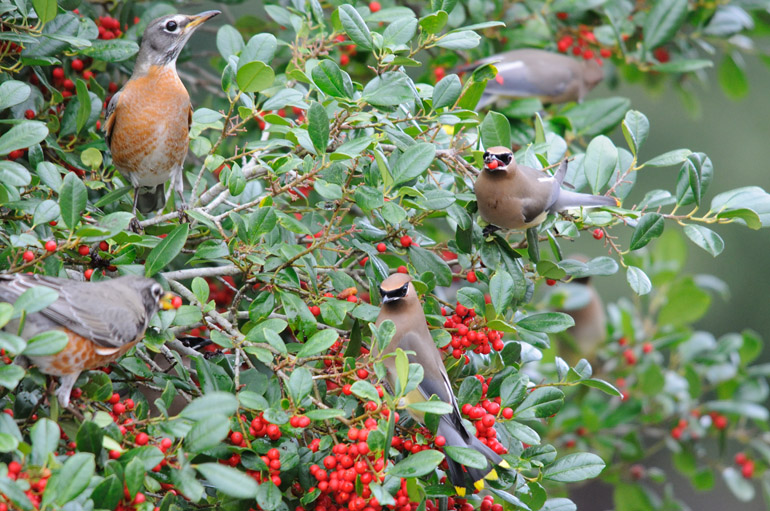
A combined flock of migratory cedar waxwings and robins assaulted the berry tree in front of my apartment the other day. They've been going from tree to tree in Melbourne until each is plundered of its fruit. I've never seen something quite like this in my few years in Florida.

web_waxwingflock_birds_0009_2544
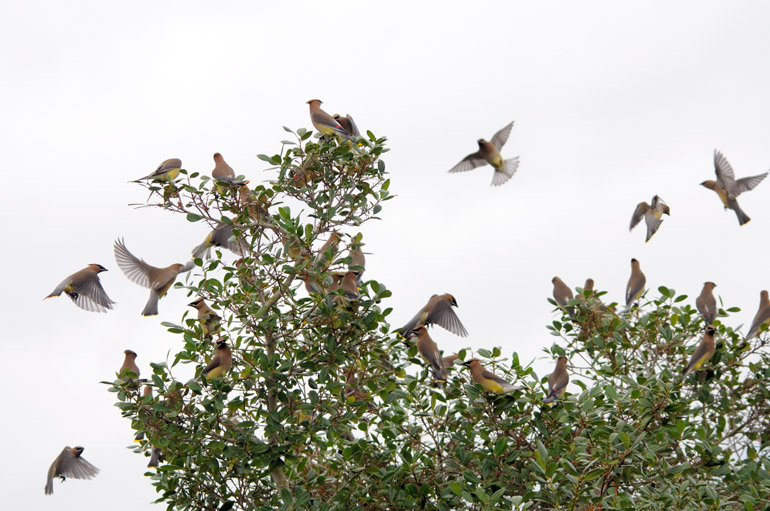
Waxwings perch on the tree.

web_waxwingsrobins_perched_0048_2547
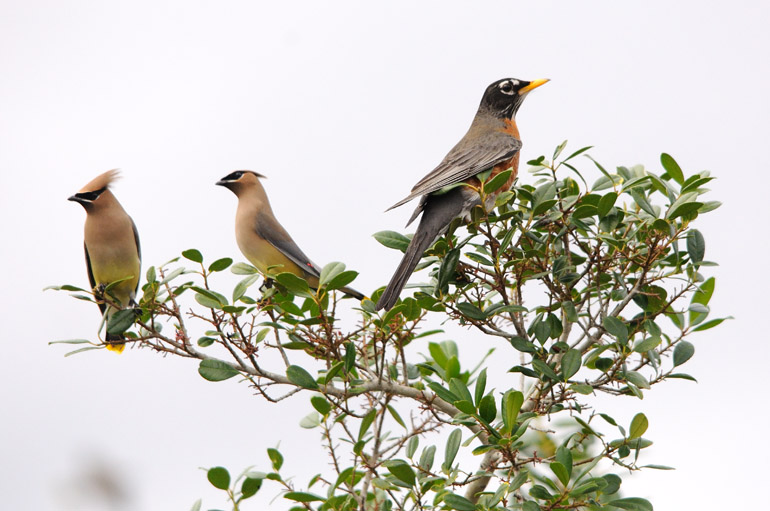
The two bird species seemed to be courteous to each other while chowing down.

web_robin_birds_0031_2546
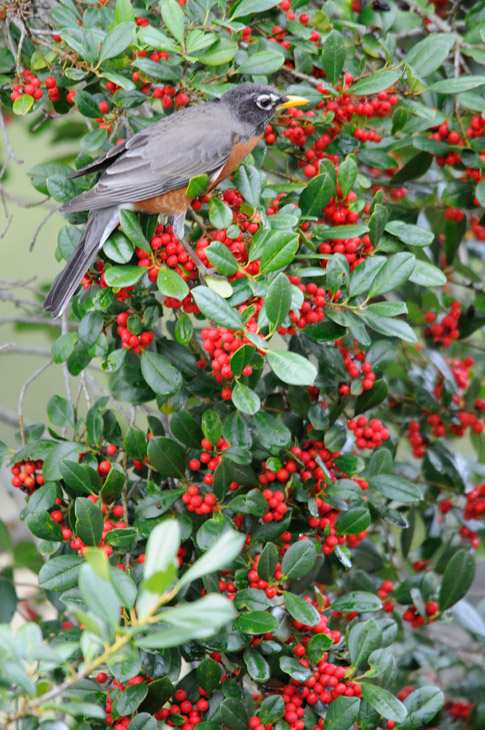
Within hours, all of these berries were gone.