Tuesday, March 8, 2011

Feathered friends, slimy reptiles and visiting relatives

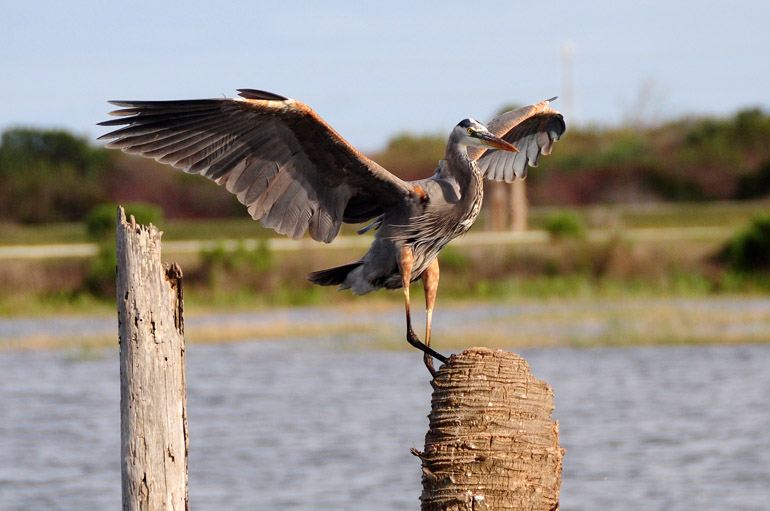
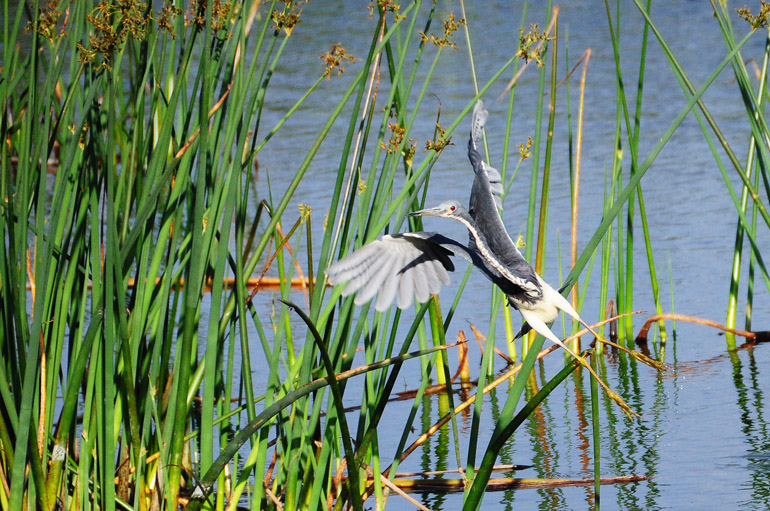
web_heron_vierawetlands_0016
A blue heron lands on a palm stump. Don't laugh; it's exciting stuff.


My paternal aunt and uncle were in town Sunday, March 6, for a spring training game in Viera.

After the Braves spanked the Nationals, we drove to the Ritch Grissom Memorial Wetlands to walk off our hot dogs and Coca-Colas.

My family is full of nature fanatics like me, so they enjoyed viewing the various snowbirds and perennial water creatures in the man-made chain of "lakes."


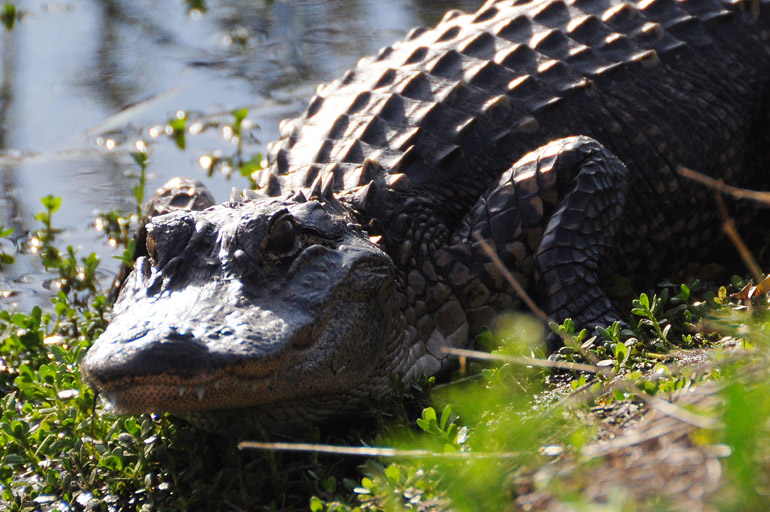
web_alligator_vierawetlands_0030
This is probably the closest I've come to an alligator. It was only a 4-footer with a smallish-looking jaw, so I felt safe.

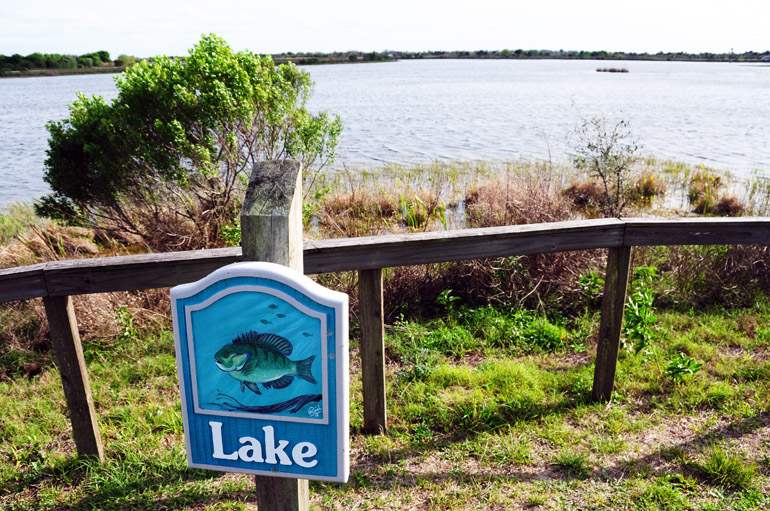
web_lake_vierawetlands_0001
I'm certainly glad this geological feature was labeled because I had no idea what it was.

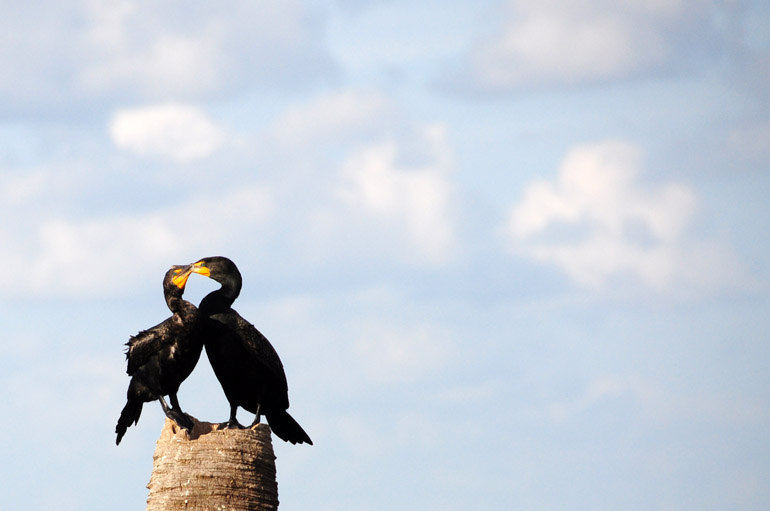
web_anhingas_vierawetlands_0036
These anhingas were sitting in a tree, N-E-C-K-I-N-G.

web_louisiana_vierawetlands_0050
That's a camera-shy Louisiana heron.

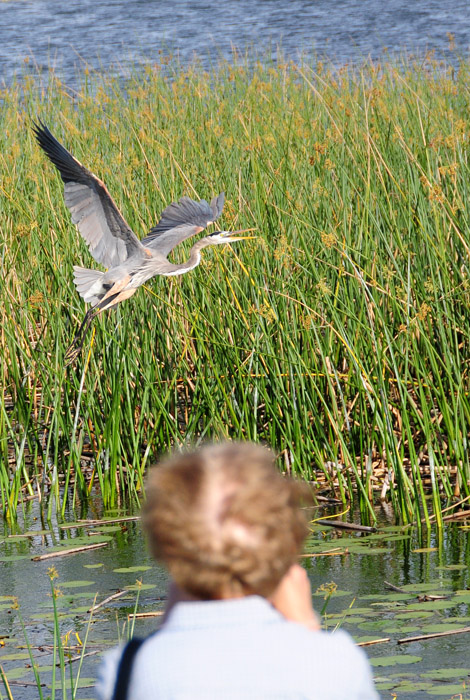
web_heronpic_vierawetlands_0047
The aunt captures a heron with her point-and-shoot camera. She got a better shot than I did.

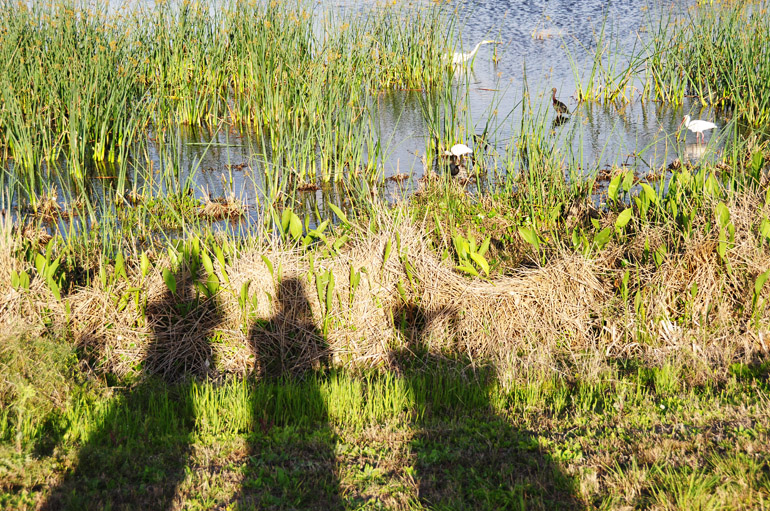
web_shadows_vierawetlands_0059
I thought I was being creative with this self-portrait of the three of us.

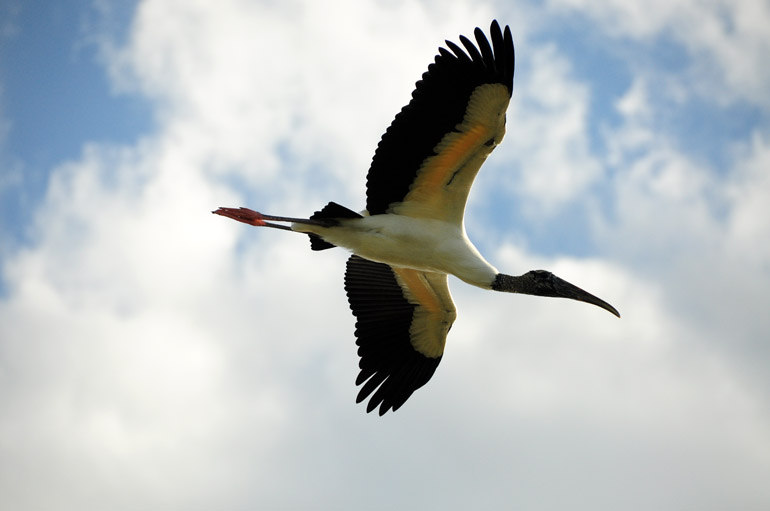
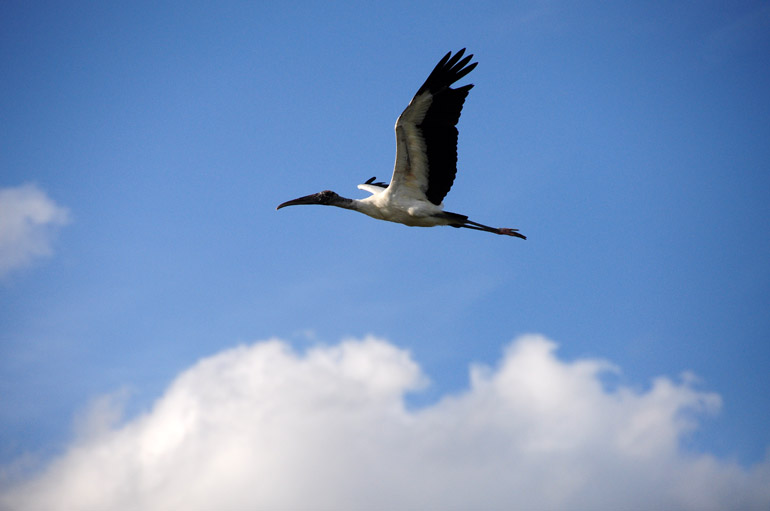
web_woodstork_vierawetlands_0062
My aunt -- Brenda is her name -- was talking about how they'd see wood storks near their Port St. Lucie rental home, where they stay for about six weeks of the year. As we were leaving the wetlands on foot, we saw several flying in.

web_woodstorkblue_vierawetlands_0071
With the wood storks as a finale, we saw a bevy of wintering wildlife.

Monday, March 7, 2011

For Discovery's finale, a lame launch and a forgettable photo

web_discovery_finale_0030
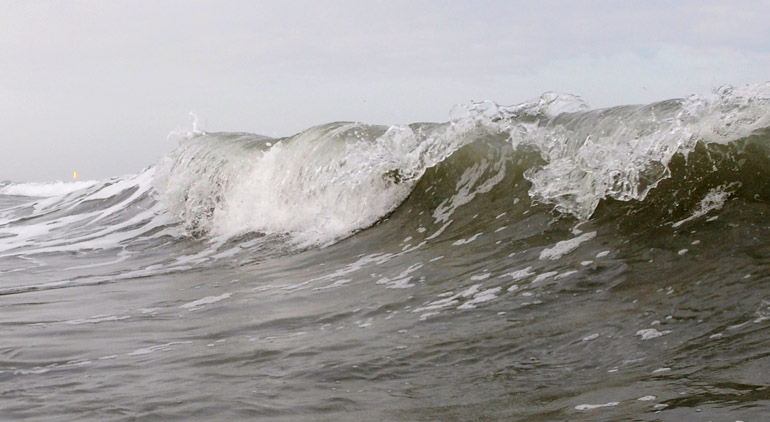
These waves were nearly 6 feet high, which provided for decent surfing. But no surfers entered my frame during the short seconds when I could actually see the shuttle's burning fuel.


For space shuttle Discovery's final launch on Feb. 24, I wanted to do something different.

Work didn't permit me to get close to Kennedy Space Center: My boss told me to stay close to the office so I wouldn't get caught in the traffic associated with the spectators. I had to be available to respond in case news broke elsewhere in Brevard County.

So I went to the beach at Patrick Air Force Base, the closest beachside location to the newspaper.

For each shuttle launch, I'm trying to bring something different to the photographic table. A unique photo is more likely to be featured prominently in the pages of the newspaper -- the highlight being this shot of Atlantis when I thought it was that spacecraft's last flight.

For Discovery's finale, I put my Nikon into a waterproof case and planned to get a shot of the contrail arcing over the Atlantic Ocean, with a surfer or swimmer and large waves in the foreground -- something you can't capture from the shore. I would monitor launch updates from my car, ensuring that the shuttle was going to blast off, then run through the crowd, jump into the water and watch it emerge from Kennedy Space Center to the north.

That plan failed, however, when a thick cloud deck moved over my area -- a popular surfing location called Second Light -- about an hour before the launch. All I ever saw of Discovery was about five seconds of flame on the horizon. Then it disappeared into the cloud.

No arcing contrail. No interesting photo.

But at least I tried. And got all wet in the process.


web_discovery_finale_0029
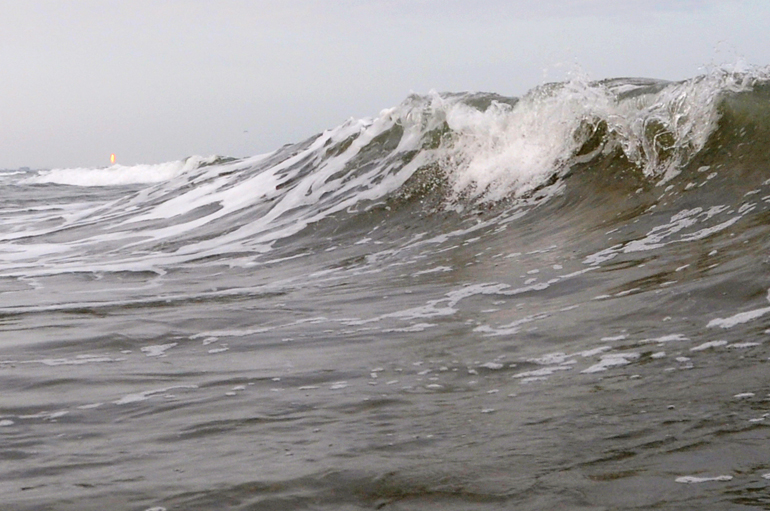
Same wave as the one above, just a little different curl action.

web_discovery_finale_0087
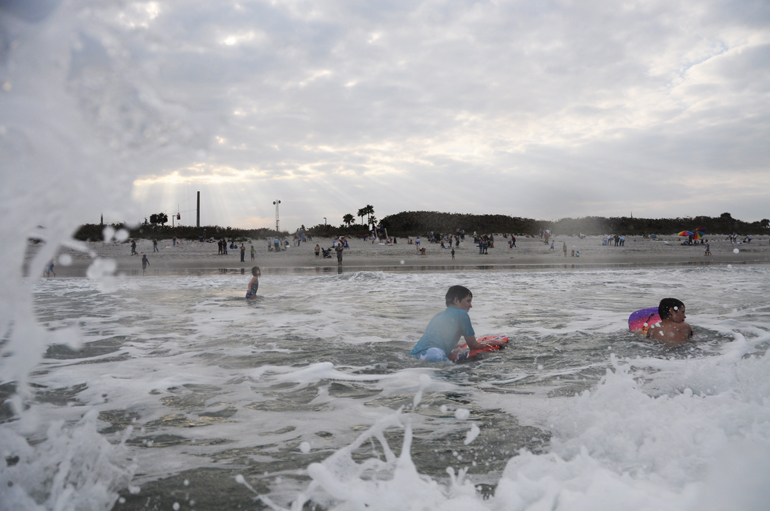
For a less popular viewing location far south of launch pad 39A, this beach at Patrick Air Force Base was fairly crowded. I'm sure the beachgoers were disappointed when they could see the shuttle only for a few seconds.

web_discovery_finale_0121
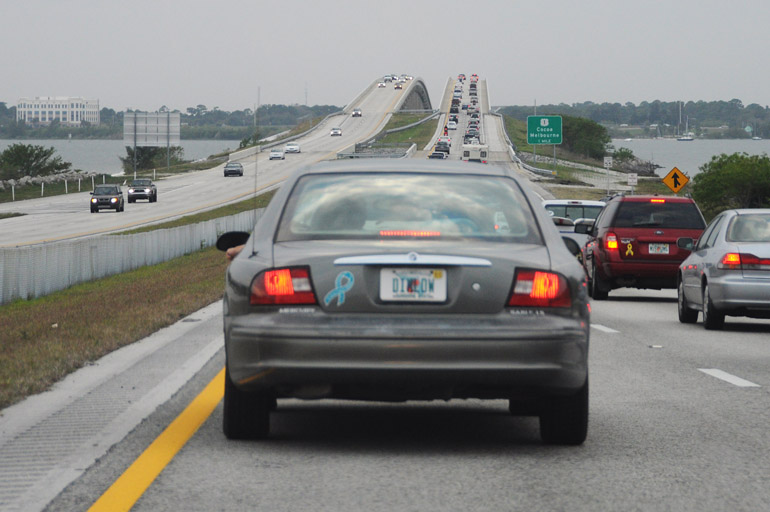
Despite being far from KSC and the more popular spectator locations around Cocoa Beach and Cape Canaveral, traffic still was bumper to bumper across the causeway leading back to the mainland.

Sunday, March 6, 2011

Atlas V rocket launch starts hush-hush mission

web_atlasVlaunch_titusville_0050
A day after a Taurus rocket blasted off from California, then failed and plunged a half-billion-dollar NASA satellite into the Pacific Ocean, an Atlas V rocket successfully launched from Cape Canaveral Air Force Station and carried an experimental military spaceplane into orbit. The best place for viewing Atlas V launches is Playalinda Beach, a federally maintained stretch of sand frequented by people who like to sunbathe in their birthday suits. But that was in the danger zone for this launch, so I went to Titusville's Space View Park late in the afternoon of Saturday, March 5.


Note: I'm getting back into posting again. I think. But I said that last time. So no guarantees.


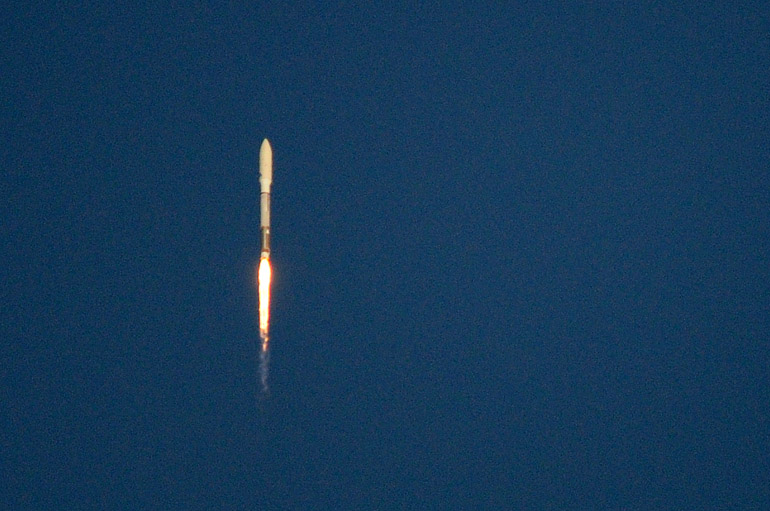
web_atlasV_titusville_birdsclose_0051
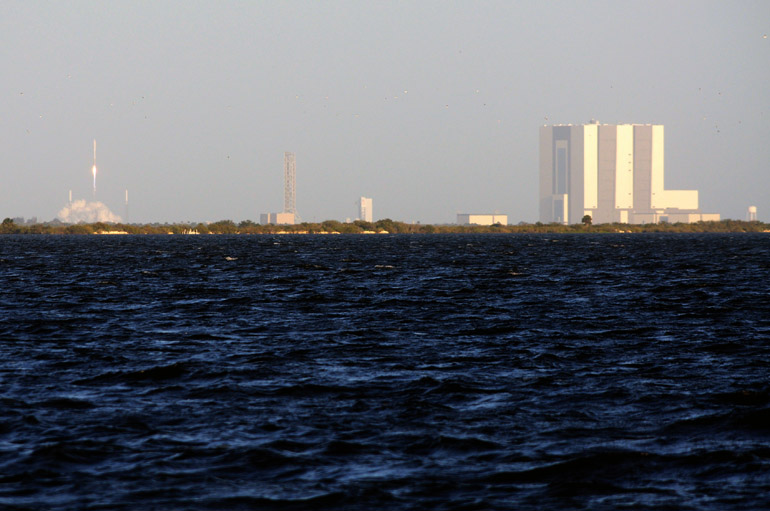
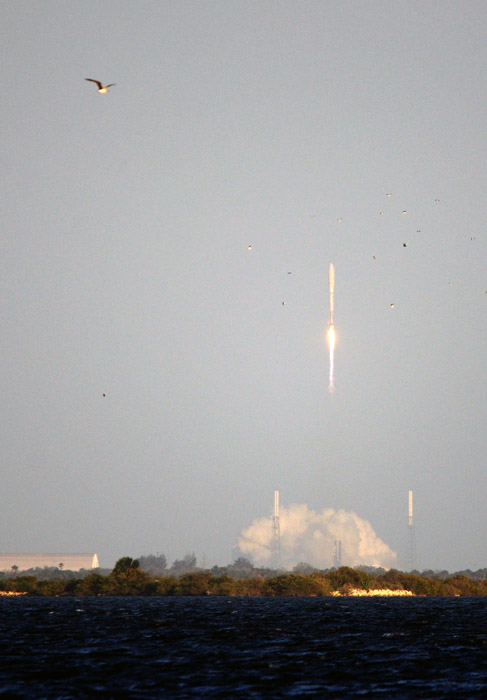
The park, set beside the Indian River, is about 13 miles west of Launch Complex 41, so these images of the rather tiny Atlas V are somewhat hazy. In this one, birds lift off as well.

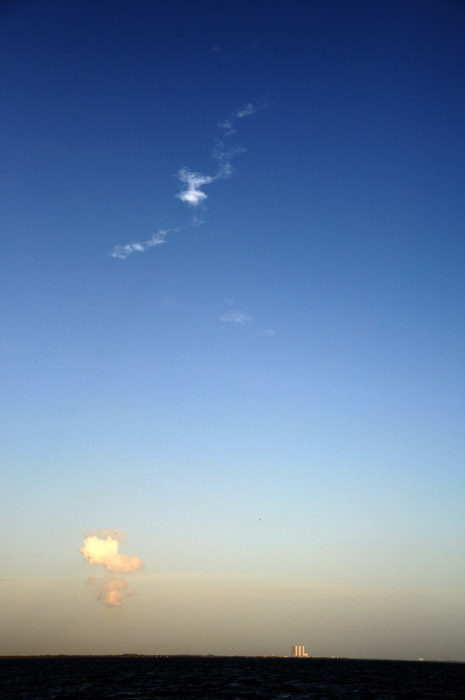
web_atlasV_titusville_VABvert_0061
The Vehicle Assembly Building at NASA's Kennedy Space Center is somewhat near the launch pad, and it made for a decent foreground subject.

web_atlasV_titusville_closeup_0071
The Orbital Sciences Corp. rocket that failed on the West Coast had issues with its fairing, the cover on top of the craft that protects its cargo. It failed to fall off as designed. This Altas V -- operated by United Launch Alliance, a partnership between Boeing and Lockheed Martin -- experienced no issues, as far as the public knows. But many of the mission's details are secret. Through my 500mm lens, I saw the fairing separate from this rocket.

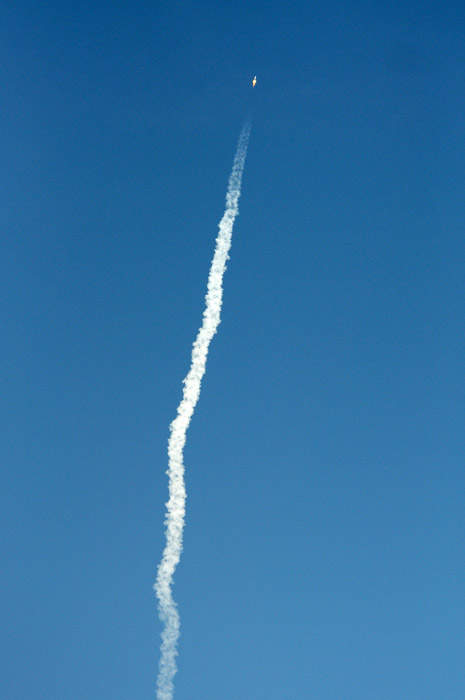
web_atlasV_titusville_contrail_0077
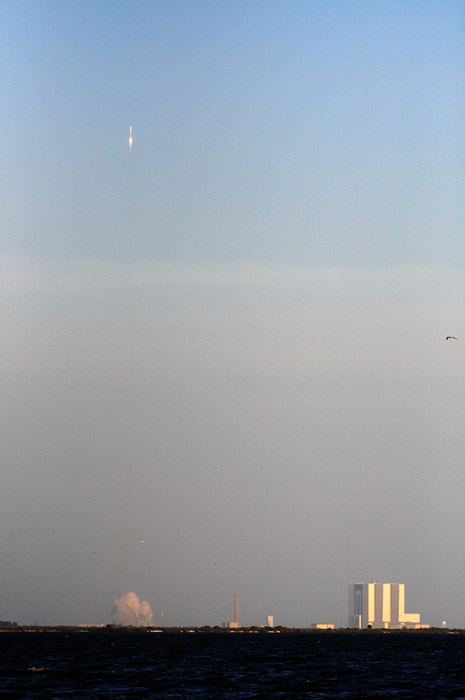
This rocket was not equipped with solid-fuel boosters, so it didn't emit a contrail upon liftoff. But once it reached higher altitudes, cold air caused condensation and this slight contrail.

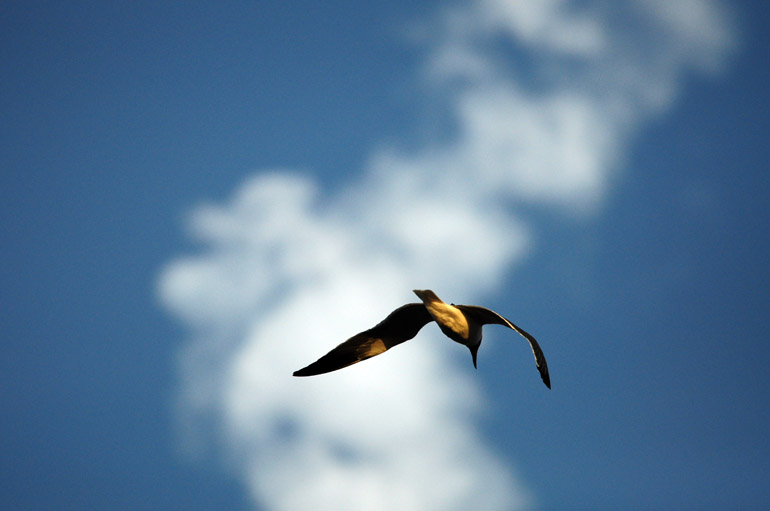
web_atlasV_titusville_contrailbird_0101
It's a bird. With the contrail in the background.

web_atlasV_titusville_remnants_0105
This is what remained of the contrail as the sun set. The weather was iffy earlier in the day, with a few light showers. But it cleared nicely for the 5:46 p.m. launch.

Tuesday, January 25, 2011

Total eclipse of the moon

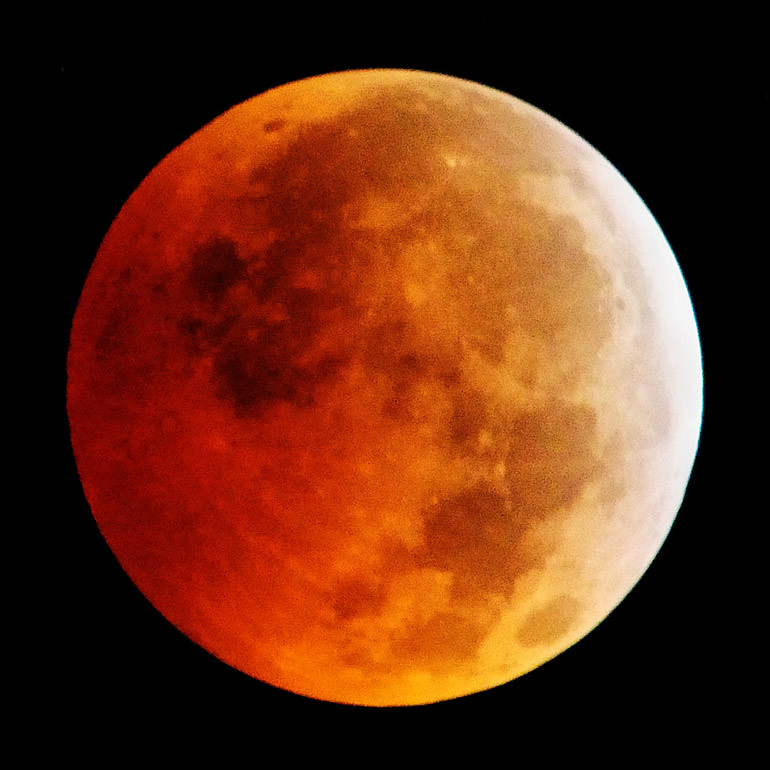
web_eclipse_0015
The lunar eclipse in its fullness, as seen at 500 mm.

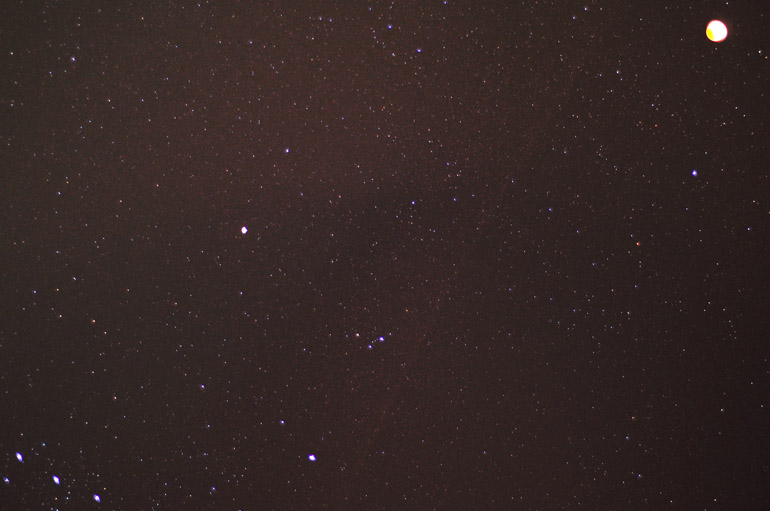
web_lunareclipse_wide_0030
In this shot with a 50-mm lens, the moon is eclipsed in the top right corner, and Orion's belt hangs out in the bottom left.


I have once again fallen behind in the posting of photos, even in the taking of photos. It must be my advancing age -- 27 next month! -- that is eating away at my desire to stay up overnight and gaze at the dark sky, trying to find an object in it to photograph.

On Dec. 21, something happened that I had been waiting all year for. I even posted on Facebook in January 2010 that a year of celestial events -- including a comet passage that, if I had gotten up early in the morning for, I would've seen -- would be culminated with a lunar eclipse.

But when it came the morning of Dec. 21, I was sick and tired and not feeling capable of keeping my eyes open for all the various phases of the moon as it was shadowed by Earth. The plan was to capture each stage, then construct a panorama out of all the images. And in addition to my exhaustion, it was freezing out.

Instead, I set my alarm clock and went to sleep. I awoke to step onto my porch and take a few telephoto shots of the orange moon and a wide-angle view. And then it was bedtime again.

Tuesday, November 30, 2010

A covert rocket launch

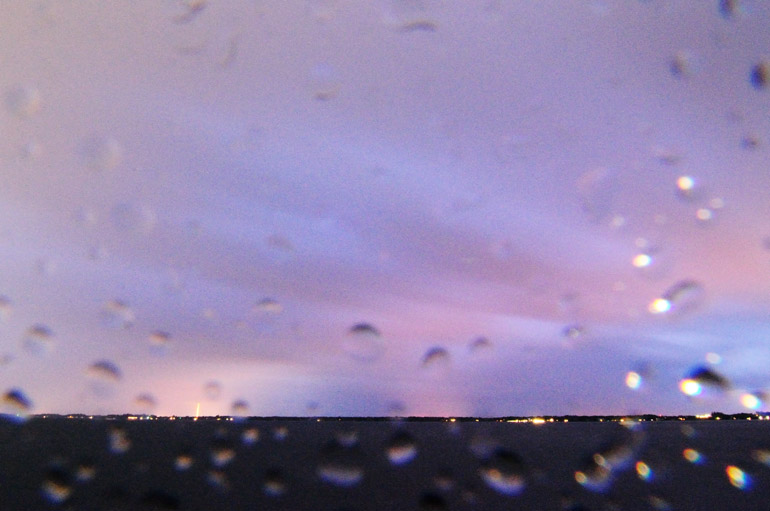
web_delta_iv_raining_0360
Rotten weather ruined an opportunity to shoot the very large Delta IV Heavy rocket as it carried a spy satellite into space. The only thing visible is a tiny streak on the horizon from the rocket, just before it punched through the clouds. It never reappeared.


A note: For two months, I've taken a rather coincidental hiatus from this blog. Not much has happened. The weather in Florida is dry, bland and not photogenic. I enjoy my friends. I have little spare time to go on aimless hunts for photographs. And, because of a computer failure, I've been without Photoshop for editing images. But now that I have Photoshop, I'm back. And since this story has only one photo, I figured it would be an effortless reintroduction to blogging...


Since I started this blog nearly three years ago, I've never missed an opportunity to shoot a space launch and post the resulting photos -- no matter how awful they may have been. Through trial and error, I've managed to get a handle on what it takes to capture a decent photo in various launch conditions.

The most difficult challenge is darkness. The first time I shot a nighttime launch -- of shuttle Endeavour from Titusville's Space View Park -- I failed miserably. Ever since, though, I've made some pretty decent exposures: up-close, stop-action photos and time-lapse "streak" shots that show the arcing trail of fire during a rocket's or a shuttle's ascent.

But the launch on Nov. 21 of a Delta IV Heavy -- the largest non-shuttle rocket -- was downright impossible to shoot. So the resulting photo, again, was awful. It was the first launch I've witnessed for which the weather was miserable: about a half-hour after sunset, heavy overcast, steady rain.

When you're 30 miles from the launch pad -- like at the Pineda Causeway, my location -- the only shot worth trying is a time lapse. I procrastinated and set up about 15 seconds before liftoff because I expected during the entire countdown that the launch would be postponed for weather reasons. I ran no test exposures. I was wet and -- believe it or not -- cold. And I forgot to change the ISO setting to 100, to limit graininess.

Instead, the shutter was open for 2 minutes, 45 seconds at 2000 ISO, which allows a lot of light into the camera and causes that graininess. The only thing that saved the exposure was the camera's f/22 aperture, the smallest opening possible for the lens I was using.

The resulting photo was raindrop-speckled and underexposed, likely because the orange glow of the Delta IV Heavy was visible for only two seconds. It quickly disappeared into the clouds, and the only trace of the rocket was a loud rumbling from its motors.

Its cargo: a top-secret satellite from the National Reconnaissance Office. Much about the flight -- the rocket's direction of travel, its window for launch -- was never made public. And if people weren't paying attention, they likely would've never known there was a launch in the first place.