Friday, May 28, 2010

Rocket light on a moonlit night

web_delta4launch_0006_2727
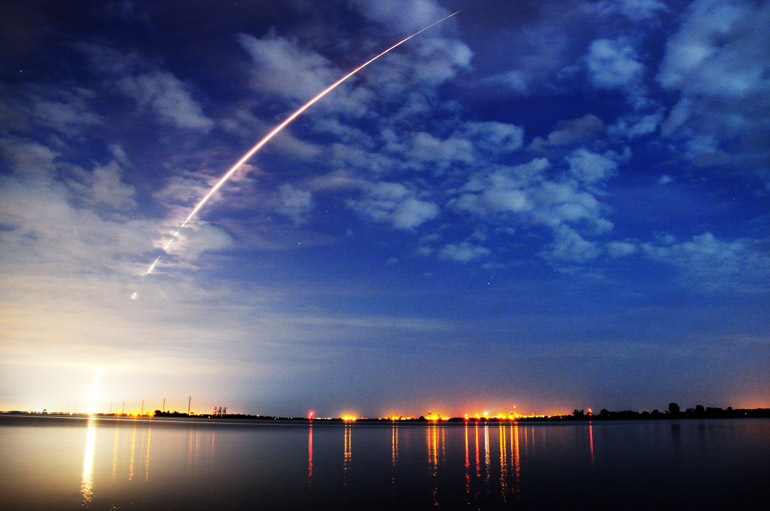
After several scrubbed attempts, this Delta IV rocket finally lifted off Thursday night, but I wasn't really prepared. I was busy at work, so I couldn't split early to make it to the beach. Instead, I pulled over along the Pineda Causeway over the Indian River, only minutes from the newspaper, and quickly set up my tripod. I took one test shot a minute before ignition, then opened the shutter for two minutes during the actual launch. The moon was full, and I prefer a pitch-black sky for evening launches, but Earth's natural satellite did light some clouds that the rocket engines didn't. So that was different. This above image is a layered version that combines both the test shot and the real thing. Such a composite gives move details to the sky as the rocket streaks into the sky at 11 p.m., delivering a new kind of GPS satellite into space.

Wednesday, May 26, 2010

Space shuttle Atlantis' last landing

web_shuttleatlantislanding_vab_0052_2723
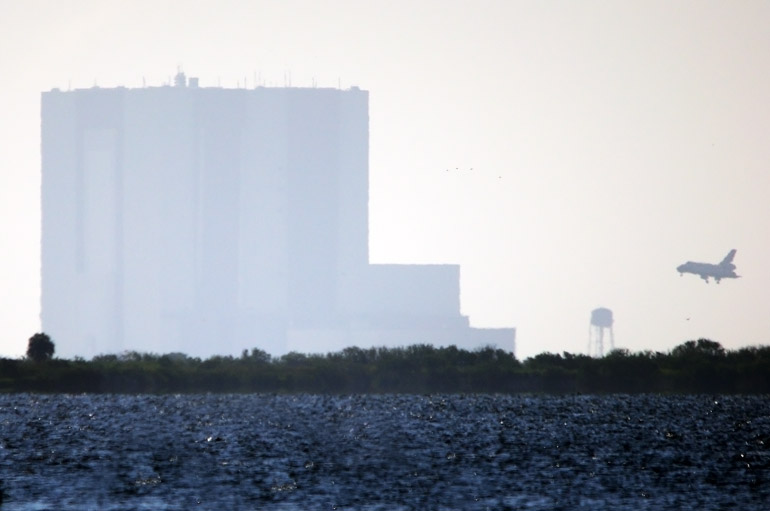
I took a shot of Kennedy Space Center's Vehicle Assembly Building and space shuttle Atlantis at liftoff, so I thought it was appropriate to get one at landing, too. This photo, taken from Space View Park in Titusville, isn't great because the morning sun was beating down in the background, but it represents history nonetheless: At 8:48 a.m. today, Atlantis landed for the final time -- at least according to the current retirement schedule.

web_shuttleatlantislanding_people_0056_2724
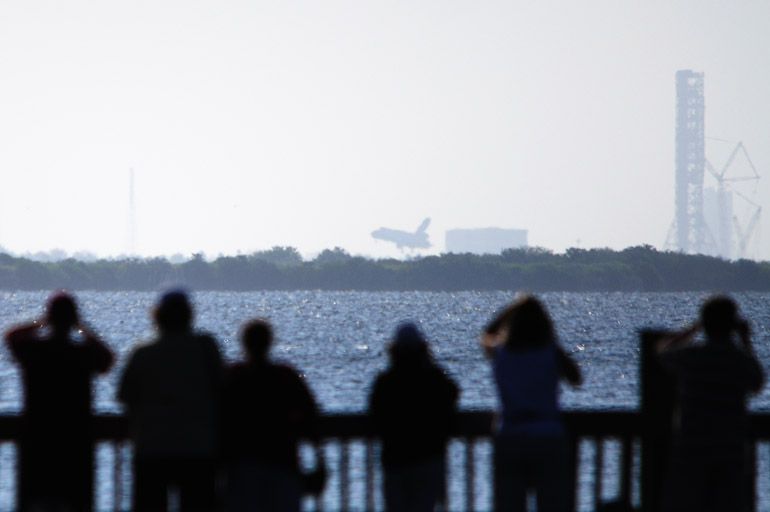
About 30 people, including these ones at the end of the pier, came to Space View Park to watch the landing. Unlike launches, the shuttle's approach and touchdown are difficult to spot. There are no engines running to emit exhaust, so the spaceship appears quite tiny from 15 miles away.


Here's a video taken on my iPhone. Atlantis' sonic booms can be heard clearly despite my phone's inferior recording quality.

Tuesday, May 25, 2010

Green alien spaceship instead of Delta rocket

web_deltaIV_delicopter_0028_2722
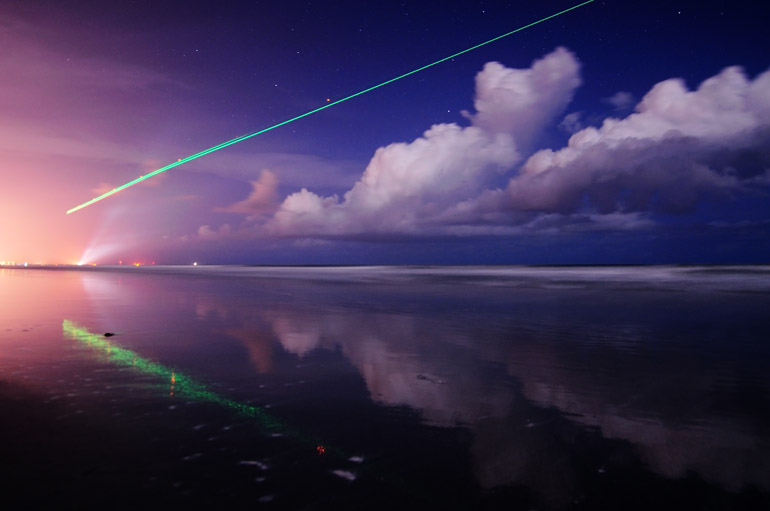
The green light from an Air Force helicopter streaks through this 19-second exposure made in Cocoa Beach. The chopper originates, of course, over the spotlights of Launch Complex 37 at Cape Canaveral, where it had been hovering for the Delta IV liftoff that never happened.


A Delta IV rocket pregnant with a new type of Global Positioning System satellite has struggled to get off the ground since Friday. On Monday night, technicians scrubbed its third launch attempt because of a glitch.

Friday, which I had off from work, was the worst of it for me, though. That's when I drove halfway to my launch-shooting location only to realize that I had forgotten my camera. I had grabbed my camera bag, but the Nikon itself was still resting comfortably on the couch. Keeping an eye out for the police, I sped home, picked up the camera and arrived at the beach in time for the launch, only to hear that it was postponed.

That forgetful episode was the second in as many nights. After a newspaper assignment Thursday, I placed my iPhone atop my car to free my hands and load my camera equipment into the vehicle. Fortunately, as my car reached 40 mph, the phone tumbled off the roof and landed on top of the trunk. It stayed there as I pulled to the roadside and rescued it.

Lucky or not, though, I'm losing my mind, apparently.

The launch was scrubbed hours ahead of time Sunday, so no harm there. I stayed home and ate pizza. And drank some pop.

On Monday, I left work and went to south Cocoa Beach for the 11:13 p.m. liftoff, only for it to be scrubbed with six seconds remaining in the countdown. Some large clouds offshore were moving northward toward the launch pad at Cape Canaveral Air Force Station, and they were lit by a bright moon. I placed my tripod strategically at the edge of the surging Atlantic Ocean. And as I tried to shoot the clouds and their reflections on the wet beach, an Air Force helicopter flew along the shoreline.

Not exactly the streak shot I was going for, but it's better than nothing.

Wednesday, May 19, 2010

Blinded by love(bugs)

web_lovebug_headlight_0013_2715
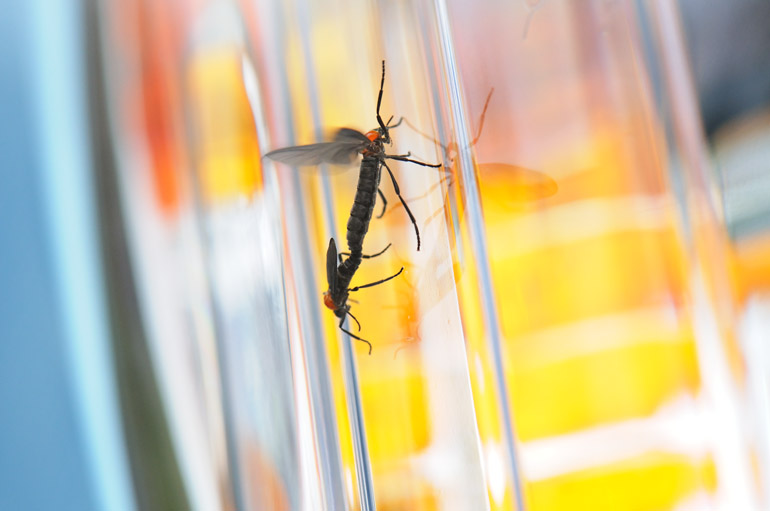
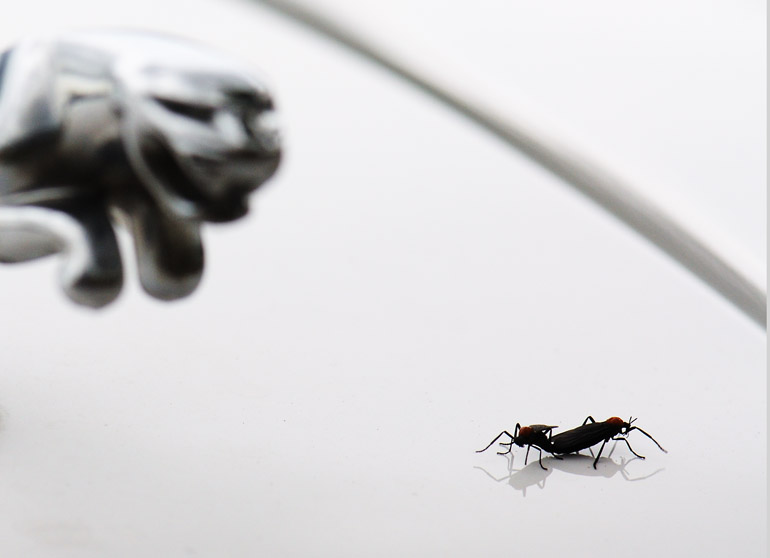
This happens twice every year in Florida: Flies known as lovebugs -- because they're most often seen in the act of mating -- swarm over the roads and parking lots, driving motorists to the car wash every day during the outbreak. This year's swarm, though, seems particularly ridiculous. I wrote this story about it. Above, a pair perches on a car headlamp.

web_lovebugs_jaguarside_0184_2718
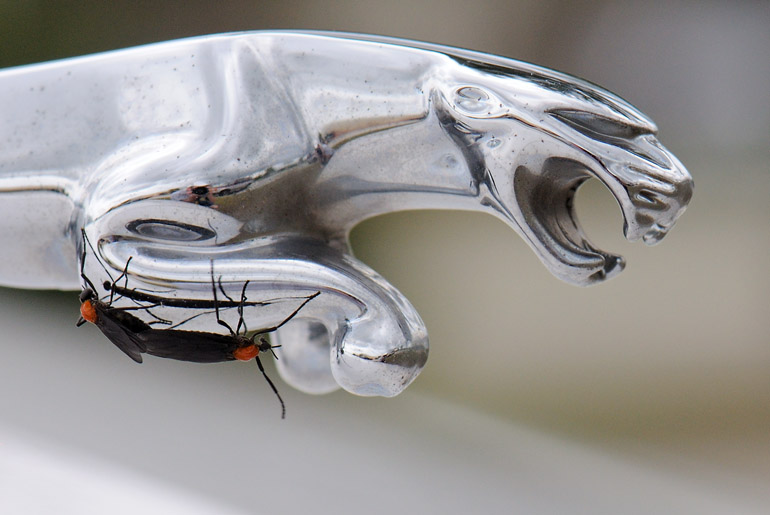
The lovebugs were all over this Jaguar I found in the parking lot of a Walmart in Melbourne.

web_lovebugs_closepair_0011_2714
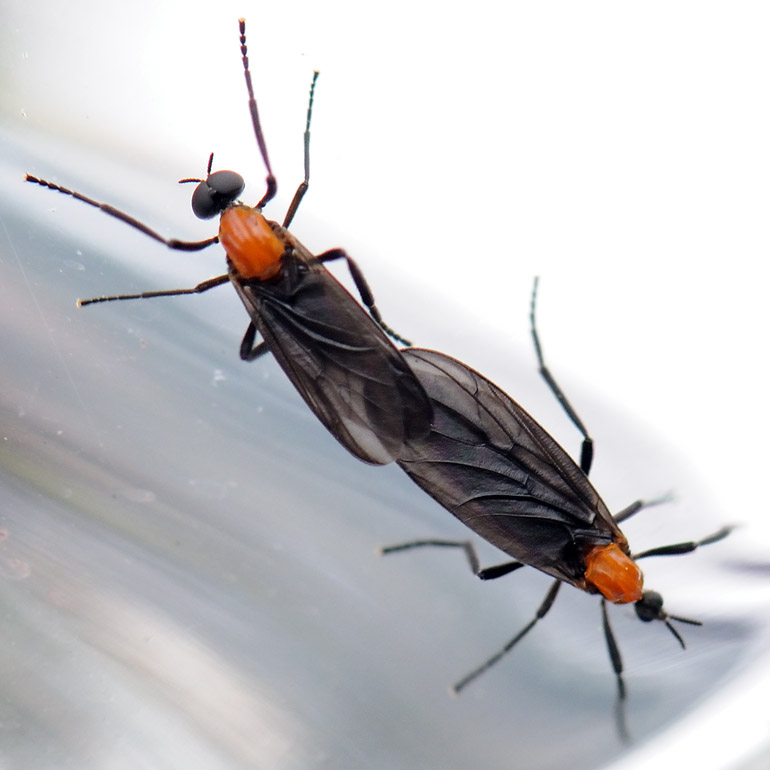
An intimate shot of lovebugs caught in the act.

web_lovebugs_bumper_0177_2717
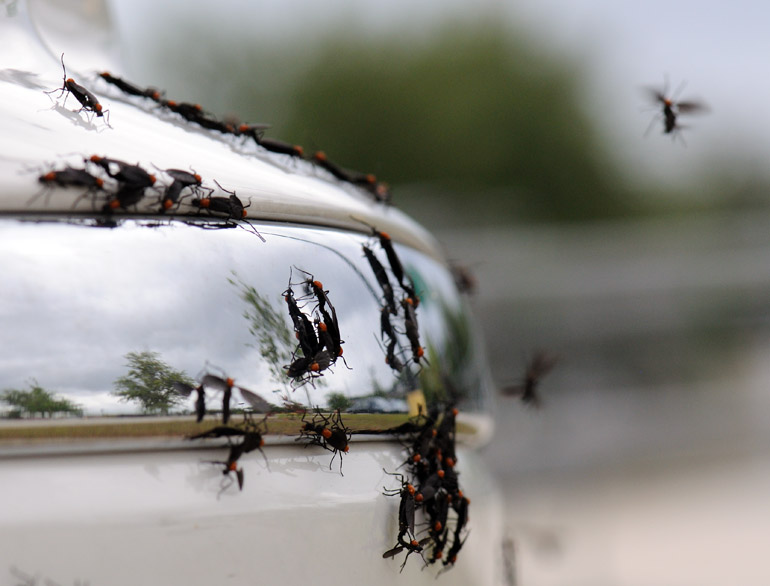
Lovebugs are attracted to ingredients in car exhaust and to the heat vehicles tend to emit while baking in the Florida sun. They also like light-colored surfaces, explaining why they landed on this white car.

web_lovebugs_jaguar_jag_0196_2719
Another two on the hood.

weh_lovebugs_sky_0001_2720
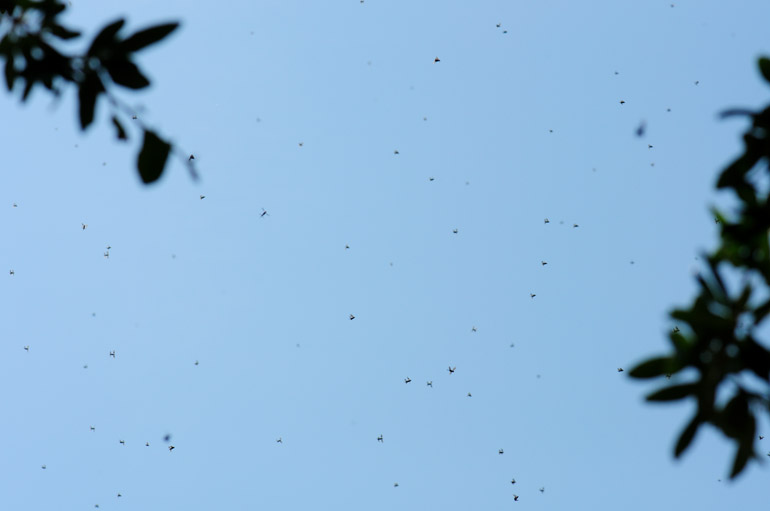
A swarm is contrasted from the blue sky. When you're moving 50 mph in a car, such a swarm makes it seem as though it's snowing black bugs. They splat on your windshield, and they're not easy to scrape off unless you do so immediately.

web_lovebugs_jaguarhanging_0152_2716
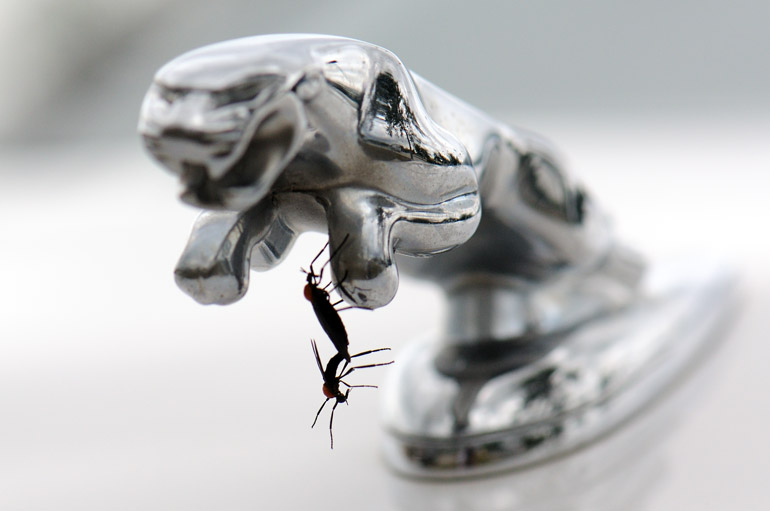
Two hang out on the Jaguar hood ornament.

web_lovebugs_car_0009_2721
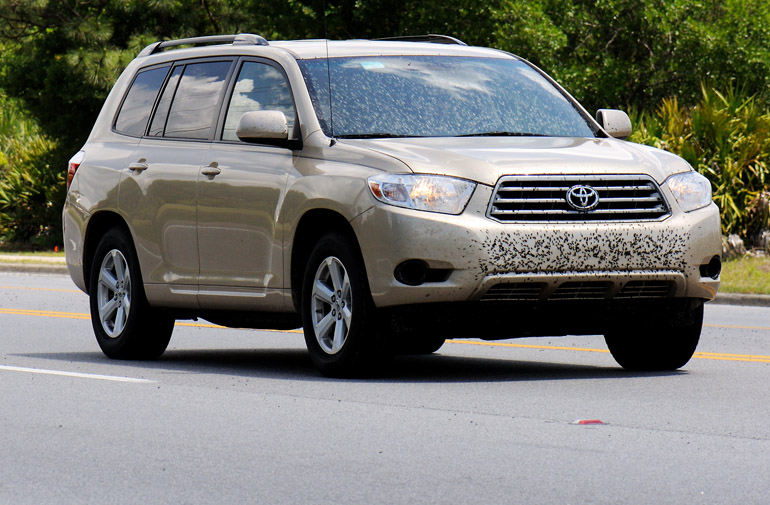
I stood alongside Wickham Road, which runs in front of my apartment complex and where the bugs seemed extremely thick, and waited for an especially coated vehicle to pass by. This SUV got it pretty bad. If lovebugs aren't cleaned off quickly, their juices can turn acidic and eat into vehicle paint. The black specks on the pavement in this photo are dead lovebugs.

Tuesday, May 18, 2010

At dusk, a distant conjunction of Venus and the moon

web_conjunctionsvenusmoon_clouds_0006_2695
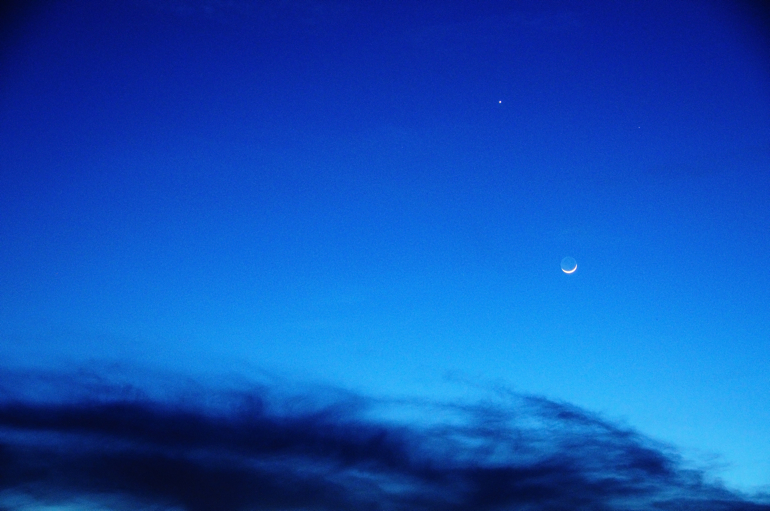
There are closer conjunctions of Venus and the moon yet to come this year (see below), but I never miss a chance to photograph these two heavenly objects during a rendezvous. This time, it was just after sunset, with a deep-blue sky.

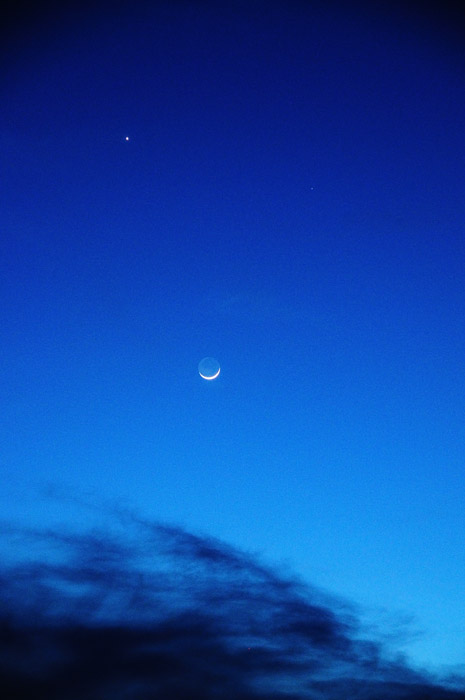
web_conjunctionvenusmoon_vertical_0008_2696
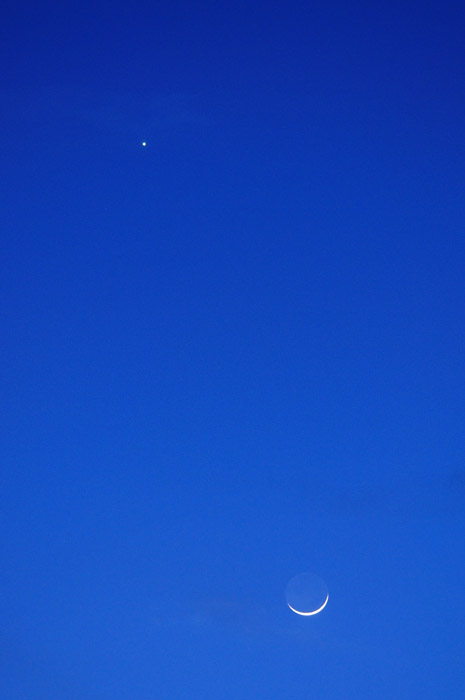
This distant conjunction came the night after a new moon, so the waxing crescent was at its skinniest (Venus, coincidentally, also was a crescent, if only I zoomed in closer). Additionally, sunlight bouncing off Earth and hitting the moon's surface faintly lit the other 97 percent of the disk that wasn't illuminated directly. The strength of this phenomenon -- called "planetshine" or "Earthshine," in our particular case -- is determined by which part of Earth is seeing daylight at the time (land reflects more than oceans) and by the amount of cloud cover in that area (clouds reflect half the light hitting them).

web_conjunction_moonvenus_0005_2694
Of course, the best conjunction in a while happened early one morning in April 2009. See that post here. A better conjunction-viewing opportunity is coming after sunset on Aug. 13, when Mars joins the party with Venus and the moon.