Sunday, April 4, 2010

Flora and fauna of Florida's springtime

web_beedaisy_wildflowers_0232_2610
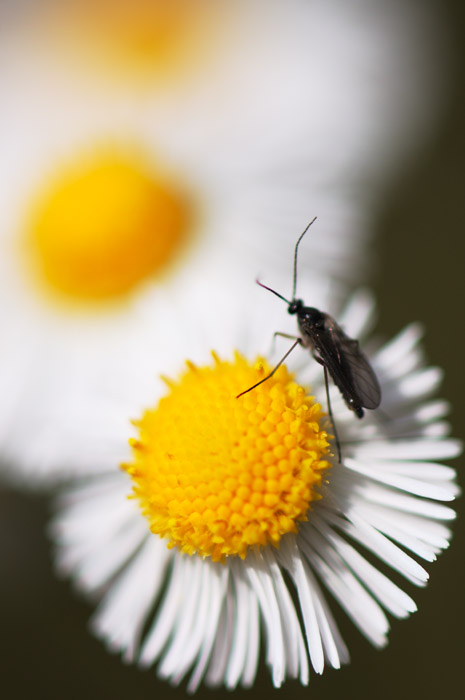
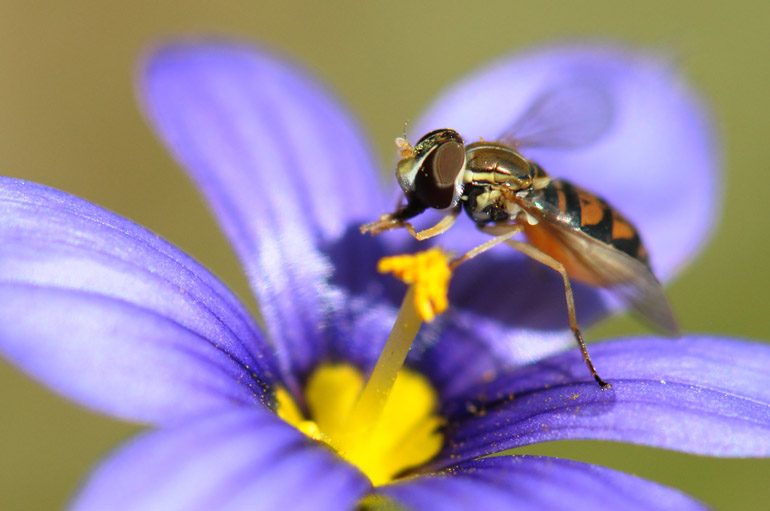
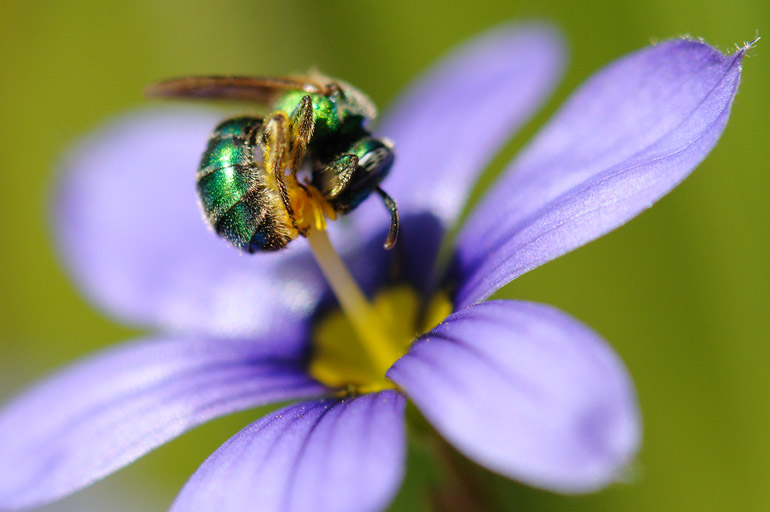
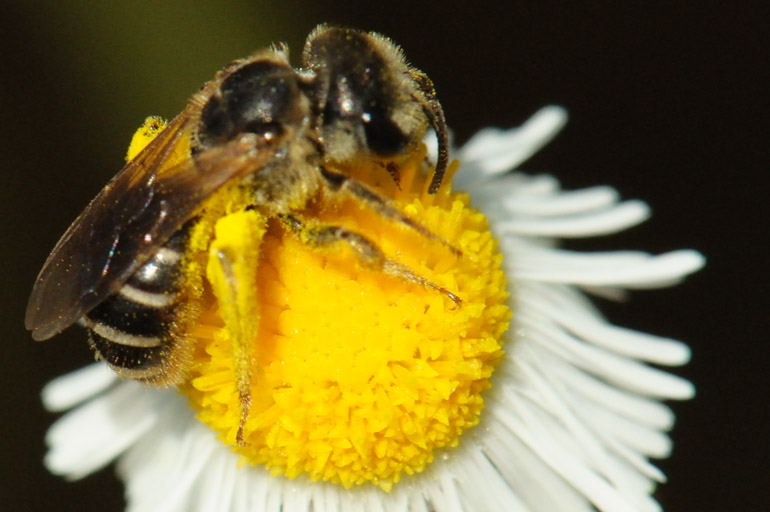
A bee collects pollen on a flower near a home in Melbourne. Dogs were barking at me while I took photos near the Parkway Drive home, but I stayed off private property, and the beasts eventually found something else to bark at.


A co-worker recently remarked at something I also had noticed: The winter season here forced scores of leaves from the trees and onto the ground. I've been here in Central Florida for nearly three years, so I wasn't sure if I was noticing an anomaly or a common occurrence. But to hear such a remark for someone who has lived here for decades, I knew the fallen leaves were out of the ordinary.

Indeed, it was a long, harsh winter by Florida standards -- the coldest on record. For me, it was the first winter here in which it actually felt like winter.

That's why the recent warming trend has been especially glorious. In years past, I've never appreciated the insects starting to swarm again or the wildflowers blooming in grassy areas along roads, only because the winters didn't seem wintry enough. With the start of spring this year, however, I've keyed my senses to the sights, sounds and smells of the season.

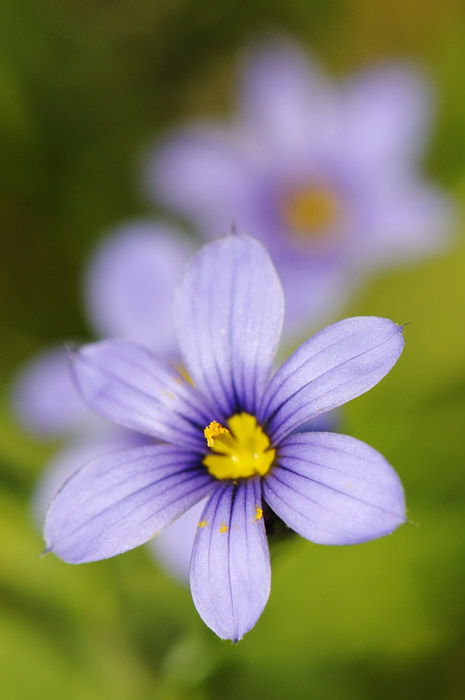
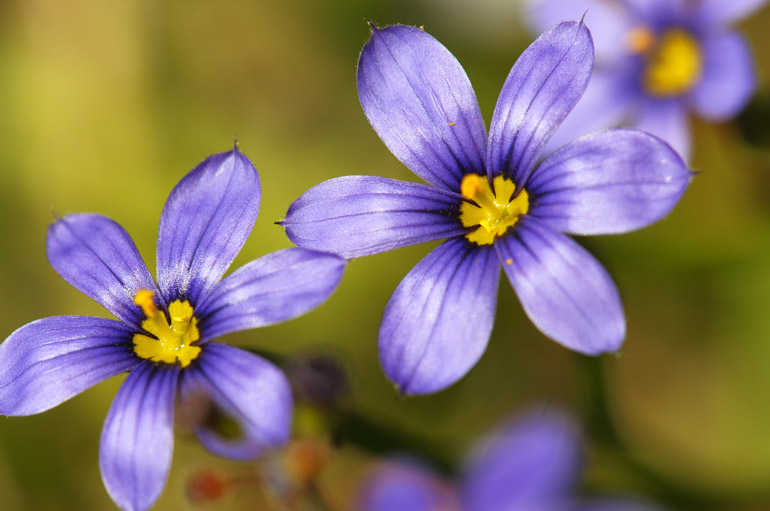
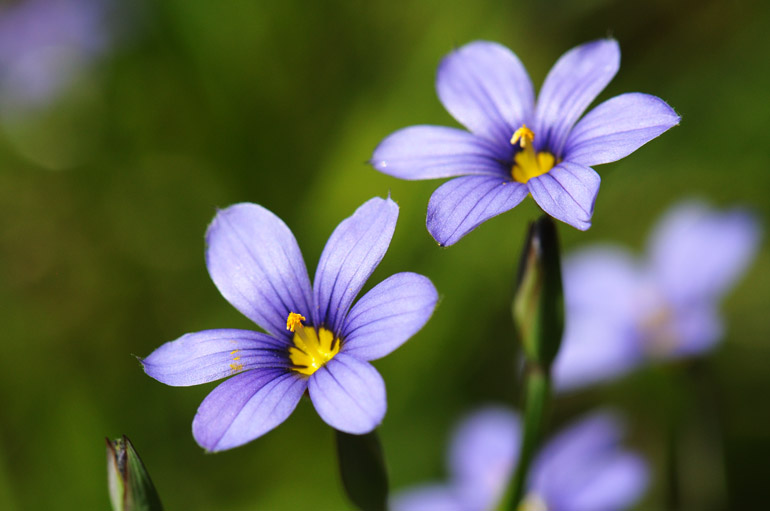
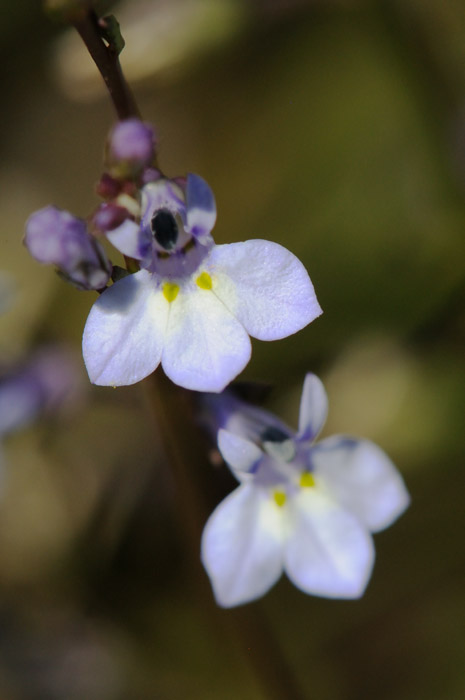
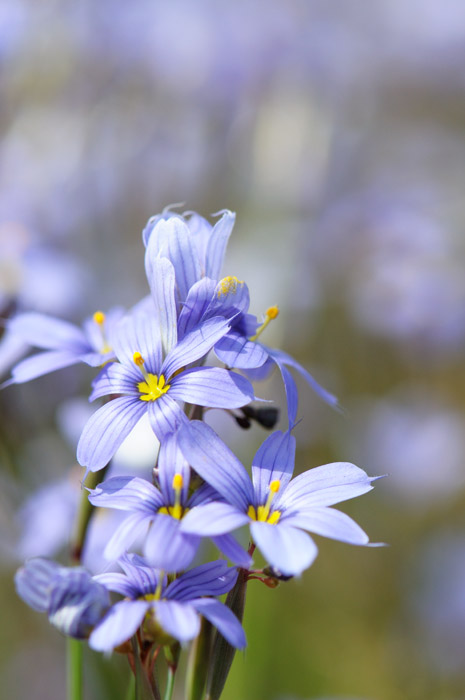
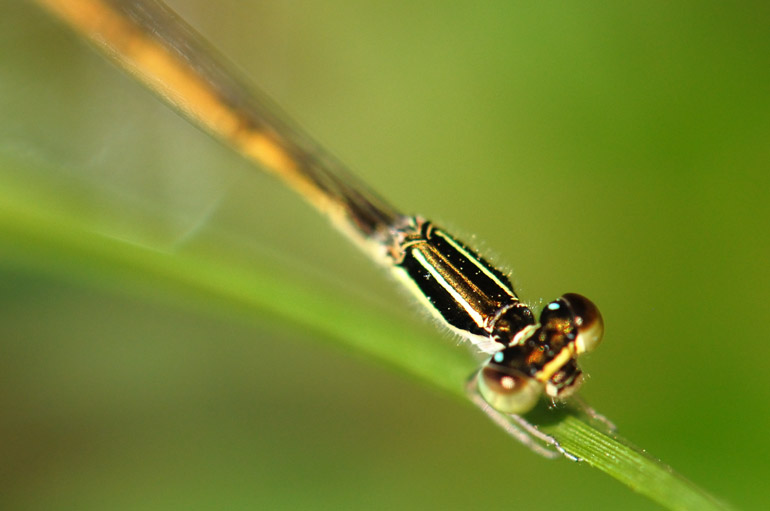
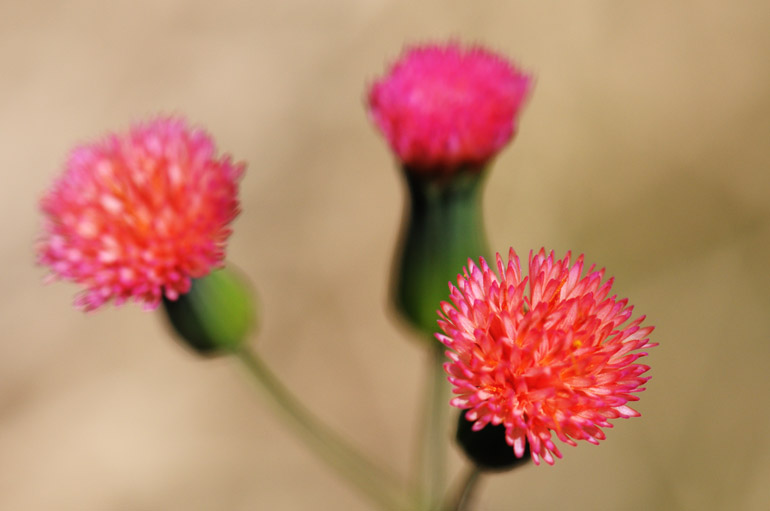
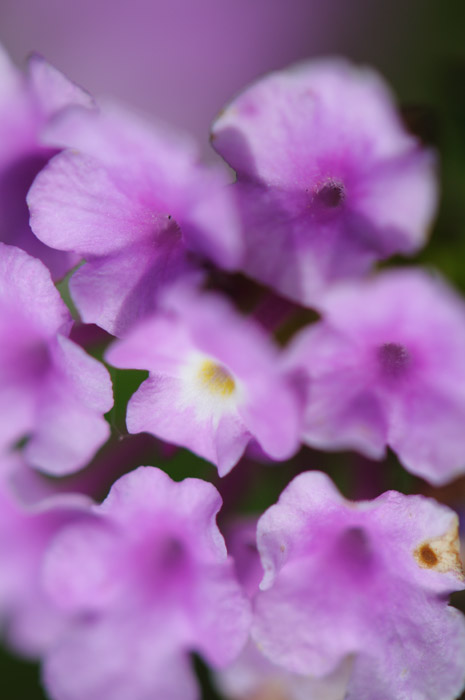
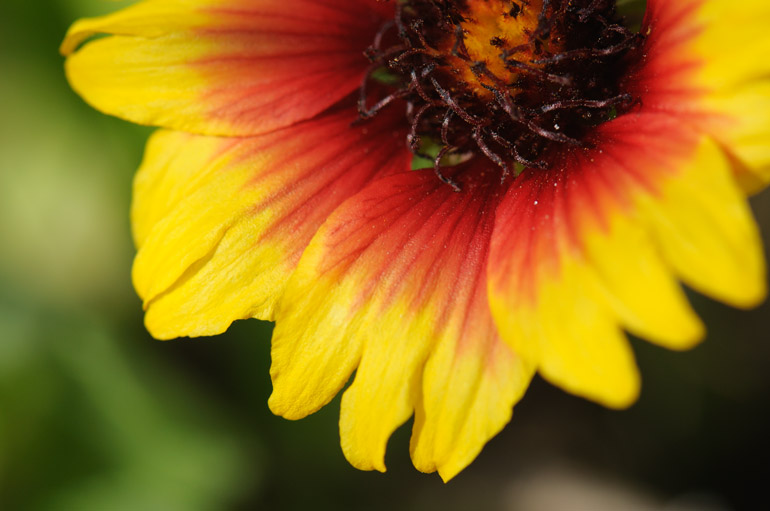
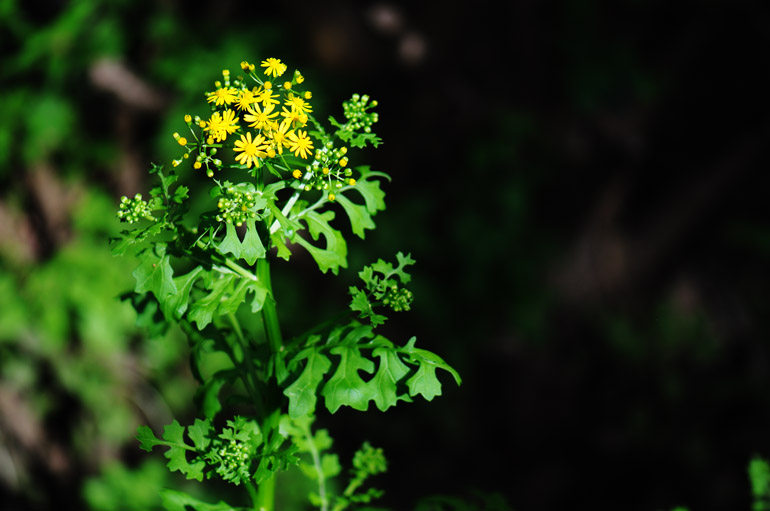
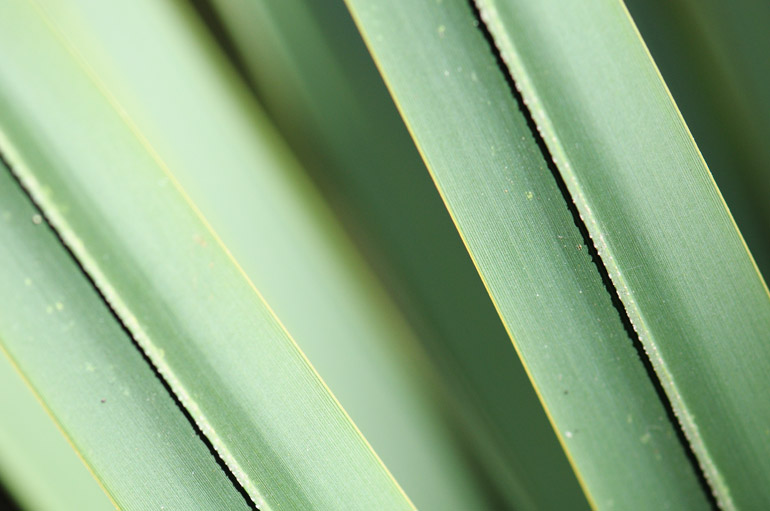
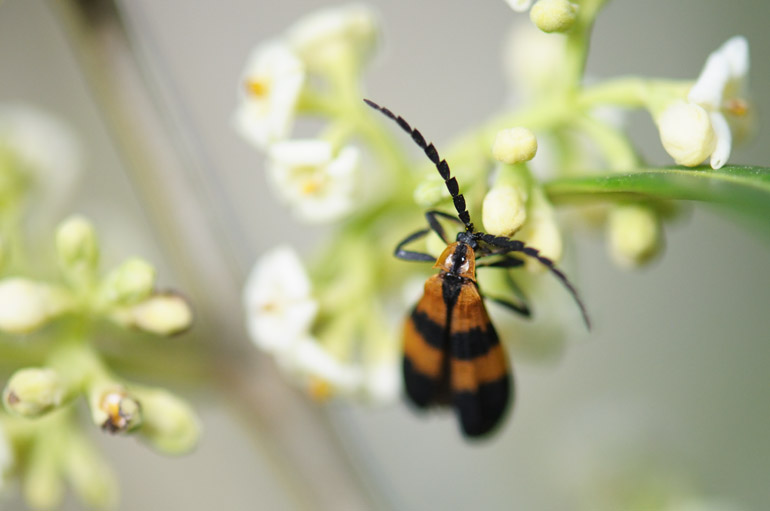
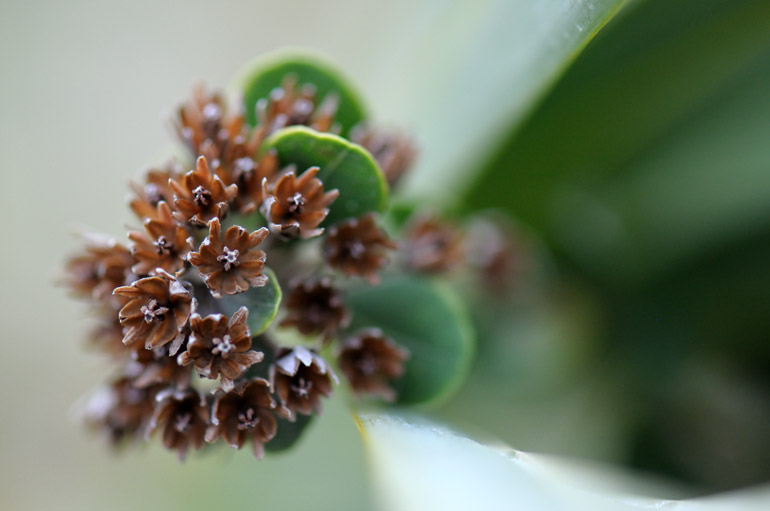
This is a partial representation of what I've seen in just the past two days. All photos were taken through my 105mm Nikon macro lens. And all the featured flora and fauna are wild.


web_daisyclose_wildflowers_0224_2608


web_bugthreedaisies_wildflowers_0242_2611


web_violetfly_wildflowers_0252_2613


web_violetfacingvertical_wildflowers_2604


web_violetthreeshiny_wildflowers_0168_2605


web_violettwofacingsun_wildflowers_0176_2606


web_violetgreenbug_wildflowers_0196_2607


web_salvia_wildflowers_0231_2609


web_violetfield_turkeycreek_0003_2616


web_damsel_wildflowers_0249_2612


web_threered_wildflowers_0290_2614


web_purple_turkeycreek_0061_2617
The remaining photos we snapped at Turkey Creek Sanctuary in Palm Bay.

web_yellowred_turkeycreek_0068_2618


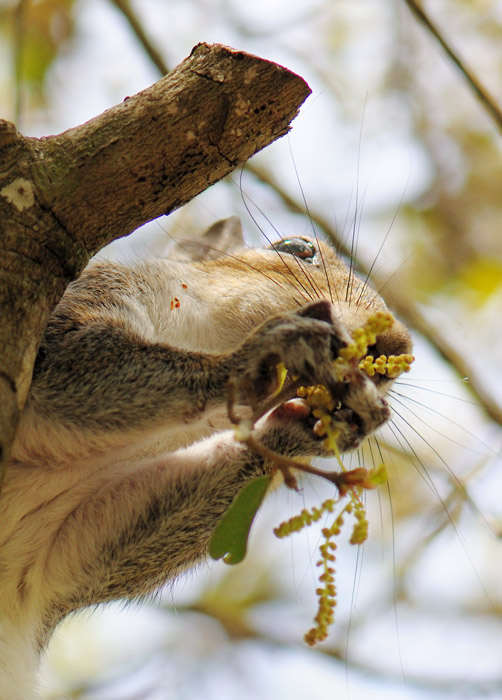
web_squirrel_turkeycreek_0073_2619


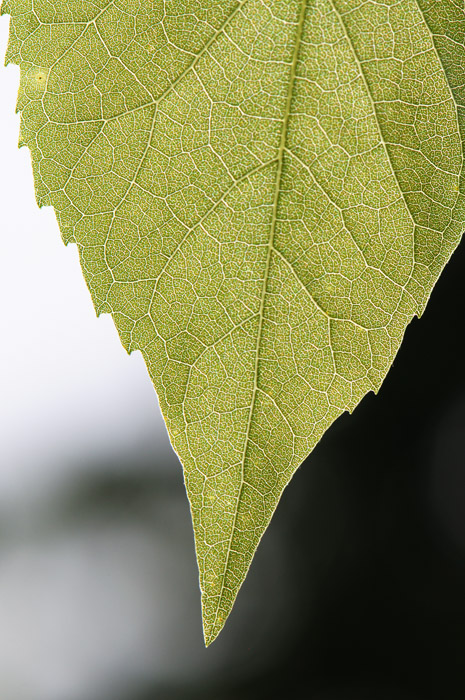
web_singleleaf_turkeycreek_0093_2620


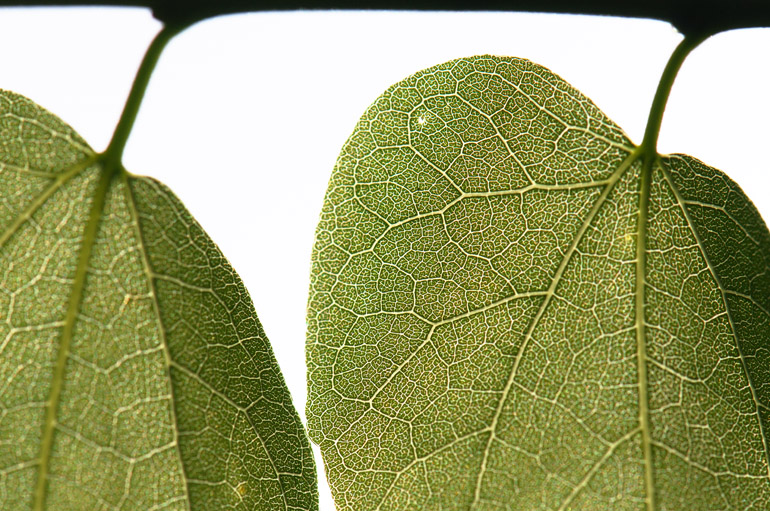
web_twoleaves_turkeycreek_0108_2621


web_leafsun_turkeycreek_0115_2622


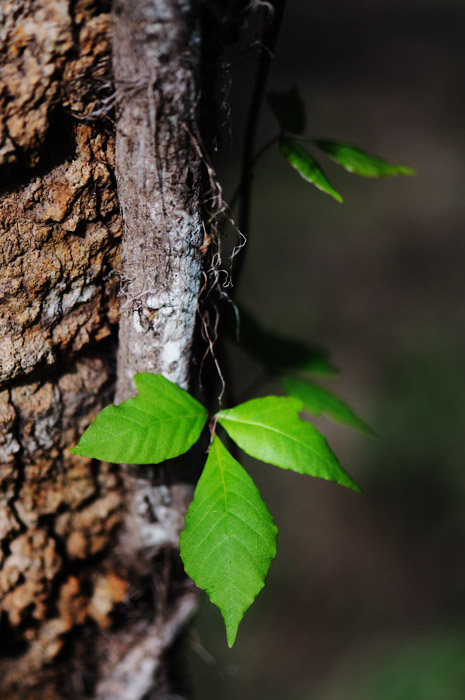
web_poisonivy_turkeycreek_0121_2623
Poison ivy.

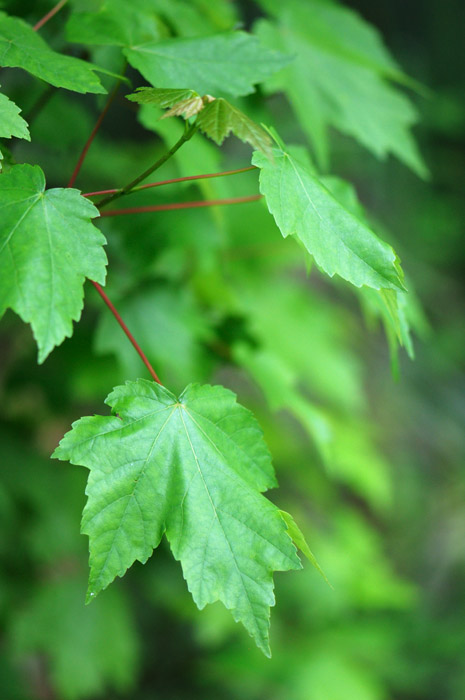
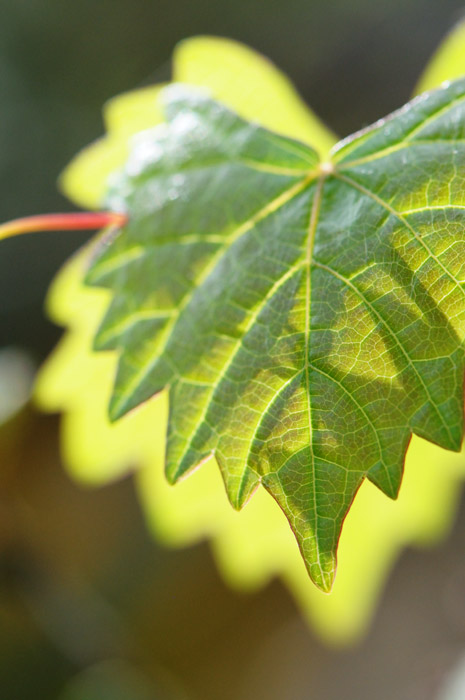
web_maple_turkeycreek_0127_2624
Maple.

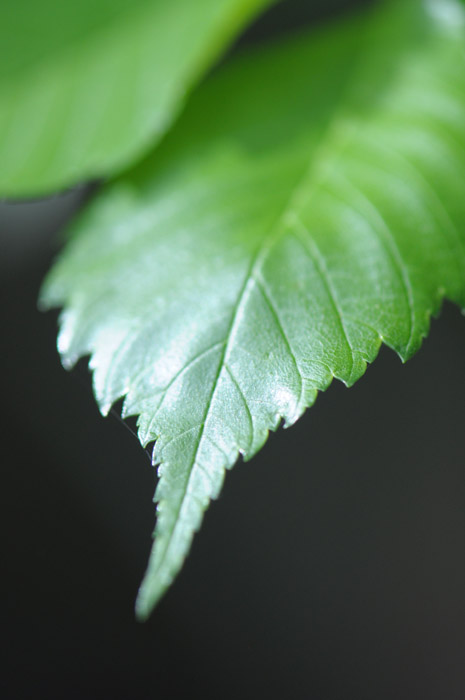
web_elmleaf_turkeycreek_0138
Elm.

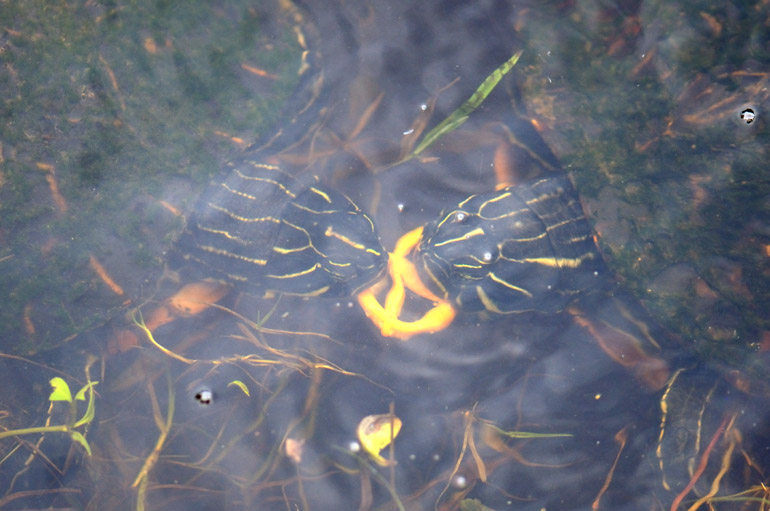
web_turtle_turkeycreek_0151_2626
Pretzels are in season for turtles.

web_weed_turkeycreek_0166_2627


web_palmettoshadow_turkeycreek_0170_2628
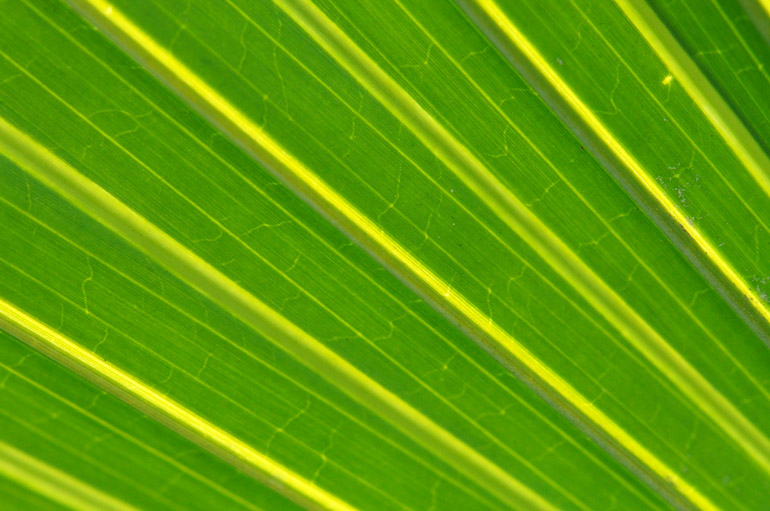
This is on the sunlit side of a saw palmetto fan.

web_palmettosunlight_turkeycreek_0178_2629
This is on the dark side of a saw palmetto fan, with sunlight shining through.

web_bugflowers_turkeycreek_0190_2630


web_cones_turkeycreek_0196_2631


web_litleaf_turkeycreek_0221_2632
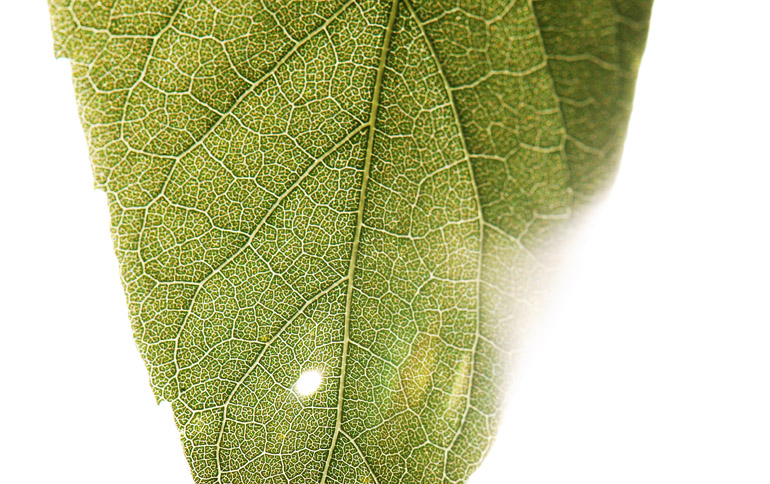
I noticed a leaf in sunlight directly behind a leaf in shadow.

Sunday, March 28, 2010

Oh, boy: El Nino brings close encounters with storm chasers, but not storm

web_tornadowarning_carsplashcrop_0119_2603
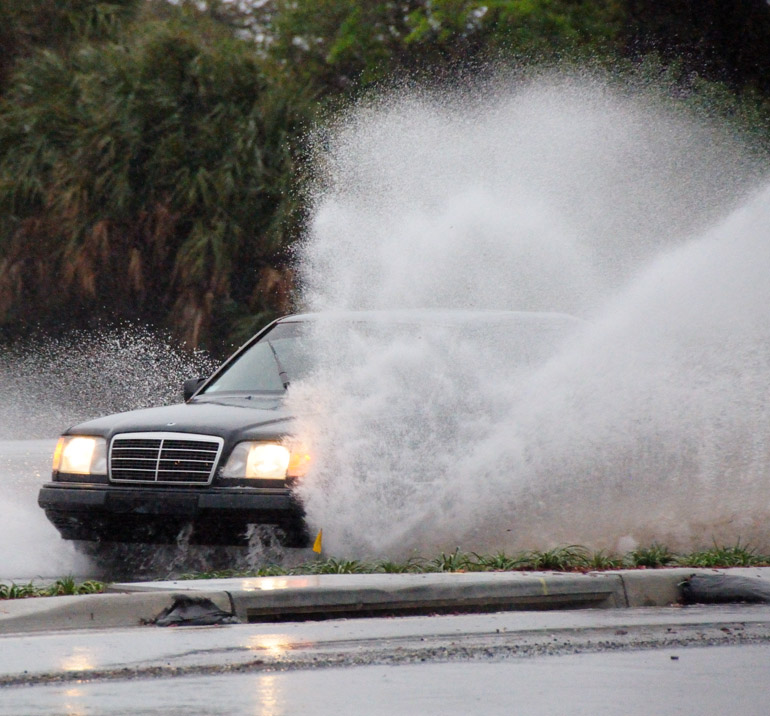
A black Mercedes-Benz splashes through a pool of rainwater that collected in the passing lane of southbound U.S. 1 across the street from Wuesthoff Medical Center-Rockledge. The heavy rain was the worst part of this storm. It's still, supposedly, the dry season here in Central Florida.

web_lightningstrike_tornadowarning_0023_2599
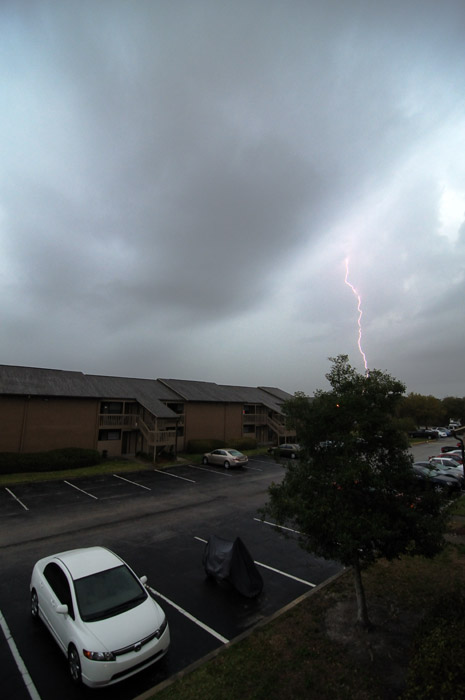
Before I left my apartment, the storm started with some lightning. This one wasn't close, but it was the only strike of the day that I caught. Oh, and that's my covered-up motorcycle in the foreground.


Along with warm weather, as referenced a couple of days ago, comes bad weather in Florida. And the people who like to shoot bad weather in Florida.

Today's atmospheric happenings were brought about courtesy of this wintertime's storm-generating machine: El Nino, Spanish for "the boy" (or to be more specific, the Christ child). A few times this season, energy and moisture have collected off the Gulf of Mexico and created large eastward-barreling squall lines over much of Central Florida.

That was the case Sunday. Only once this year has such a storm system spawned tornadoes in Brevard County, and that was when I was fast asleep one January morning as the twister damaged nearly 300 homes just to the north of my apartment. Two areas of today's event, though, carried the potential for tornadoes. Television meteorologists said the mesocyclones were rotating and picking up strength as they neared the Space Coast on their northeasterly course.

More interested in lightning, I set out to an area near where the strongest part of the storm was supposed to rip through. When I stopped at a small park by the Indian River in Palm Shores, though, lightning struck a utility pole about 15 feet away, making me rethink getting out of the car.

I then realized that I'm a wuss and that I'm only 5 feet, 10 inches tall - give or take ... OK, OK, I'm more like 5-9 - considerably shorter than the multistory light pole. Lightning likes tall things; therefore, lightning hates me. Or so goes my logic.

Through the downpour, I bolted to a covered picnic area at the end of a pier jutting into the river. A perfect spot to be hit by lightning or a tornado, I thought. I snapped pictures of the dark clouds. The lightning was gone, for some reason. But the wind was coming from the east and the west and the north and the south, indicating that there were extraordinary forces at work - none of which made love to my camera, though they did get it quite wet.


web_rainroute1_tornadowarning_0074_2600
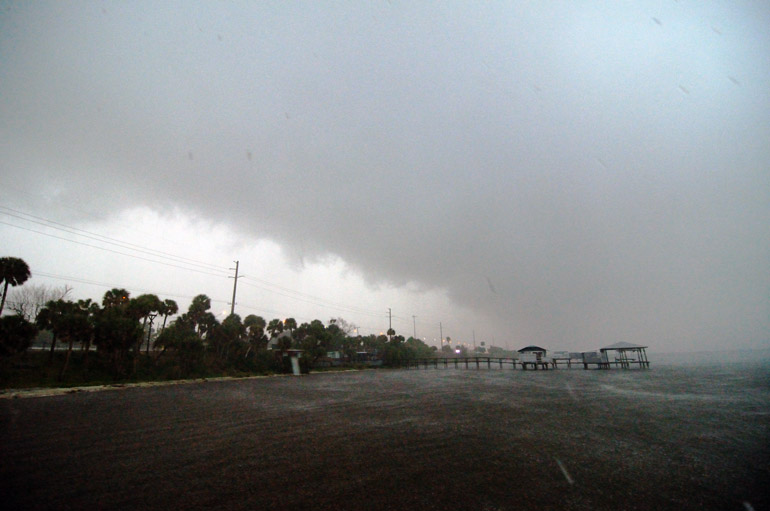
Rain comes down hard outside my covered spot on the Indian River.

web_cloudsroute1_tornadowarning_0086_2601
All this happened around 5:30 p.m., but the clouds made it quite dark.


But alas, no tornado, no waterspout. The storm passed over the river without destruction. The pelicans nearby were the most disturbed by the event, as they flew from one spot of the river to another each time the wind picked up in the area they were occupying. A few ibis seemed inconvenienced, too, as they huddled under the boardwalk leading to the pier.

I drove farther north to Rockledge, where there was still hope for activity, according to the Emergency Alert System message on the radio informing motorists that, as a better alternative to weathering the tornado in a vehicle, they should "find the nearest ditch" and lie face down. I was having no part of a water-filled ditch in which I would surely drown if I were to plant my face into it.

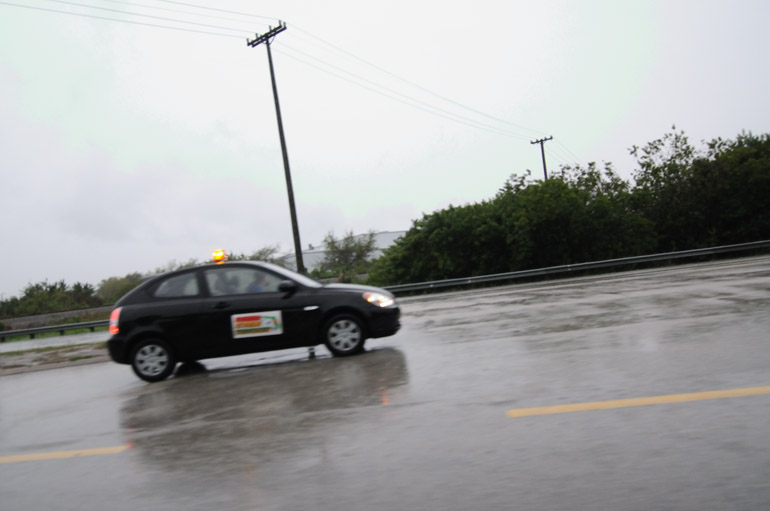
Along northbound U.S. 1, I passed a small black coupe with a light on top that flashed yellow. A sign on the side said, "Florida extreme stormchasers." I'm not sure which was meant to be extreme: the storm or the chasers. Or both. But there was only one chaser in the car, so I briefly felt the urge to correct the errant plurality of the logo.

web_chaser_tornadowarning_0095_2602
I snapped a blurry shot of the storm chaser's car as I passed. He was sizing up dark, low-hanging clouds in the distance. The clouds don't look dark in this shot, though, because it's overexposed.


On that topic, I don't consider myself a storm chaser. I'm a photographer with a propensity to shoot whatever naturally occurring event or rocket-propelled object is the most exciting thing happening at the time. My car requires neither a flashing light nor a flashy logo to warn motorists of my tendency to rubberneck and gawk at clouds while I travel at speeds often in excess of 70 mph.

In the end - instead of a magnificent daytime lightning photo, or a hit YouTube video of a tornado ripping up the platform I was standing on, or a shot of a waterspout forming a rope ladder to heaven - all I got was wet. Soaked, actually. I went home to cook myself a warm chicken dinner - in which, ironically enough, the object was to keep the meat sufficiently moist.

Friday, March 26, 2010

It's beginning to look a lot more like Florida

web_warm_cocoabeach_0001_2598
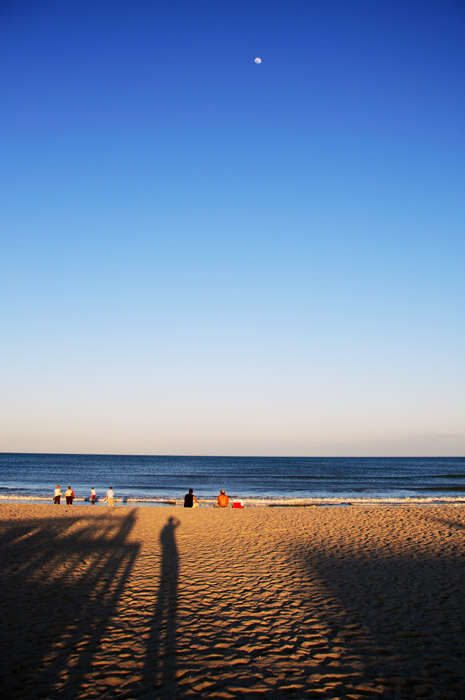
The scene on Cocoa Beach during a stop with my motorcycle around sunset Friday night, the mildest evening so far this year.


Finally, spring has sprung in Florida. After week upon week of horrendous cold - highs no higher than 70 degrees on many days, preventing the snowbirds from spreading their wings and the spring break tourists from, well, doing whatever they do - the mercury hit 80 degrees Friday. It's perfect motorcycling weather, though with the warmer temperatures, the insects are back in force. But there's nothing like a large dragonfly hitting you in the nasal bridge at 70 mph to usher in the season.

It's only a matter of time before the weather starts becoming more active, which indubitably means more storm photographs.

Thursday, March 18, 2010

A career move at least partially precipitated by this blog

web_vierawildfires_2008_0564
I somewhat covered, on this blog, the historic wildfires of 2008 in Brevard County. The outbreak destroyed three dozen homes. Above, firefighters stood in front of a blaze in Viera and stopped it from burning homes only feet behind them.

web_smoke_wildfirelakewashington_0011_2571
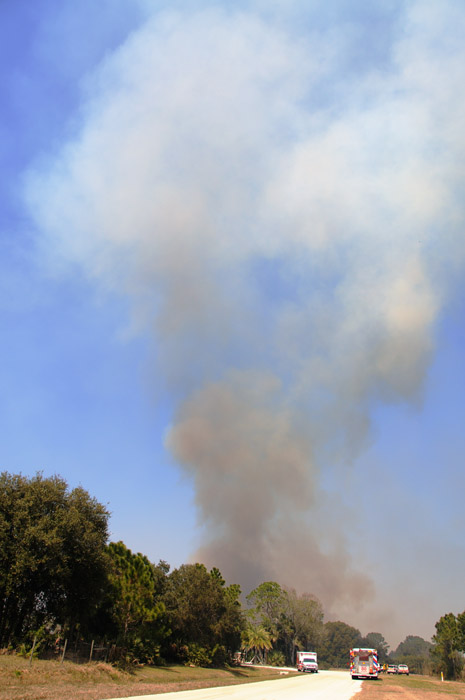
The 2010 wildfire season has commenced in Central Florida, and this grass blaze near Lake Washington Road in Melbourne started one morning two weeks ago when I was out for coffee. The gaper I am, I went to the scene and sipped my 7-Eleven joe while waiting for something drastic to happen. Disappointingly, the most exciting thing to happen was when a bedraggled fellow rubbernecker with long, oily hair and torn jeans spilled his bicycle in front of the fire-rescue crews. Apparently, talking on his cell phone and pedaling, all while watching the smoke plume, took more concentration than he could muster. He was unhurt.


After nearly three years of rubbernecking by day - then posting the results of those adventures on The Offlede - and editing newspaper stories by night, I'm making a change. I've decided to employ my photographic and reporting skills toward more financially gainful ends than just a blog with a loyal but limited following.

As of April 5, I will switch from copy editing - one of the most noble, thankless jobs in journalism - to reporting, a post in which I'll be responsible for reacting to breaking news and covering wide-ranging stories on multiple platforms: online, in print and possibly on television. I'll be writing and shooting video and photos of man-induced incidents and natural disasters, including fires, which have so often attracted me in the past. (I do enjoy an adrenaline boost from time to time.) It'll be similar to my reportage in Bangor, Maine, but much different from the stories I wrote in Washington, D.C.
There's no telling the nature of the impact on this blog. I do suspect that some things will be covered exclusively for my employer, but I'll alert readers here to any notable photos I take, of course. Coincidentally, The Offlede is at least partially responsible for this career development, as it has been unhidden from my bosses and a showcase of my work beyond the copy desk. It also kept my other skills and interests sharp while I practiced full-time editing.

On The Offlede, more than a year has gone by since I last addressed any element of journalism. Some of the photos I take could qualify as journalism, but I haven't been directly discussing the state of the industry. The reason is simple: Journalism is not something journalists want to talk about these days. Newspapers, my medium of choice, have incessantly cut employees and forced them to take unpaid leave. With fewer co-workers, our jobs have gotten more difficult, but we have continued to step up to the plate and make the most of the situation. All of this we have done without rewards, as pay has been reduced and frozen.

But, or so it appears, we're in for a bit of a thaw.

No journalist wants to jinx his own profession, but I don't subscribe to superstition. With some promising indicators - increasing circulation and heightened advertising business - the industry is a much more palatable topic around the dinner table these days. Few people think journalism eventually will die. And I'm definitely not one of them. But in the future, unfortunately, reporting likely will become more valuable than editing. To be a journalist who can execute both tasks raises my stock, making it less likely that an employer would unload me. That's why I thought a change was in order.

I'll miss copy editing. I'll miss the responsibility to ensure quality on Page 1, a job I've had for most of my time at FLORIDA TODAY. I'll miss catching errors that could have led to lawsuits and other embarrassing situations for my employer. I'll miss cracking jokes that only other copy editors understand (I won't even attempt one here). I'll miss writing the newspaper words that people always read: the headlines.

I won't miss working weekends.


web_rays_malabarfire_0182
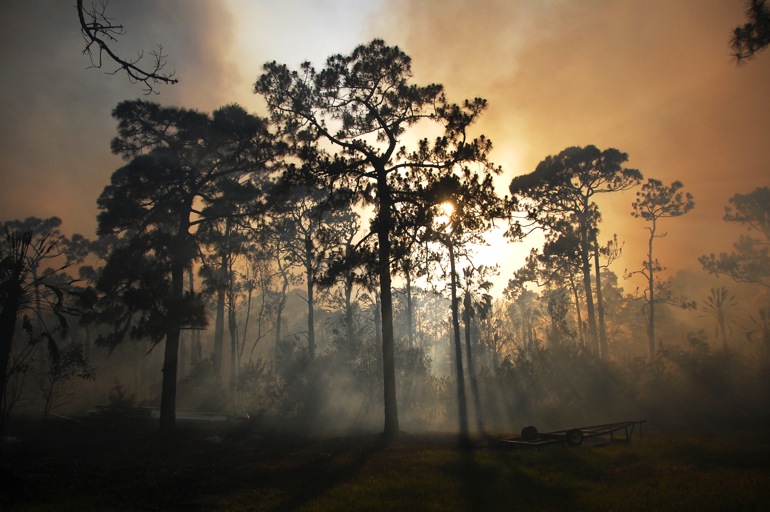
Taken off the hard-hit Corey Road in Malabar in 2008, this photo of smoke-diffused sunlight derived some beauty from such an ugly situation.

web_tractor_malabarfire_0112
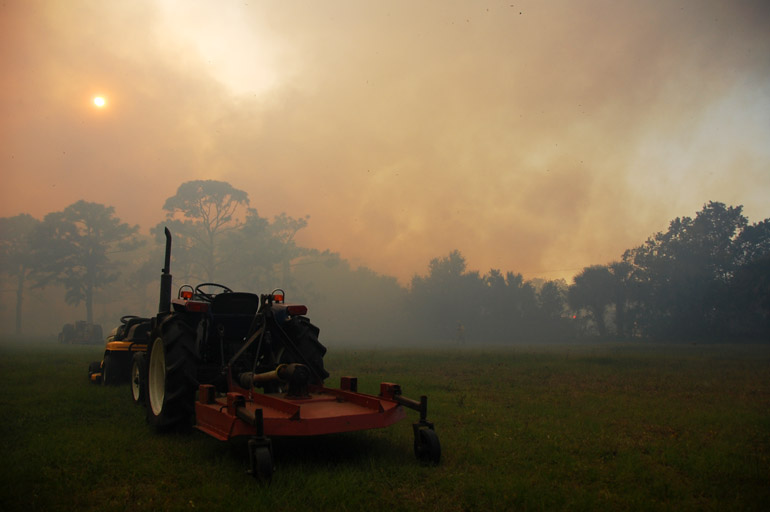
Near where the previous photo was shot, this tractor sat in the front lawn of a home that was threatened briefly by the blaze.

Monday, March 15, 2010

Florida's mountains: clouds

web_patrickbeach_cloudsmountains_0104_2572
The sky was clear except for the thick clouds paralleling the horizon of the Atlantic Ocean off Patrick Air Force Base.


Several times in the past week, while steering my growling Harley-Davidson down the oceanside highway of Brevard County, I've noticed cloud banks offshore, dark at their base and sun-kissed at their peak. From the mainland, they appeared as snow-capped mountains in the distance, a sight that harks back to my visit to Denver, where there are panoramic views of the Rocky Mountains from the flat metropolitan area.

There are no mountains in Florida, of course. Unless you count the mounds of displaced dirt that litter the sites of retirement communities in the making. Even then, there's no snow. Though I'm sure you could find Florida snow in some of the shadier locales here.

Florida's weather, meanwhile, continues to be unseasonably cold and generally fair, spare the occasional squall lines that rake across the state and spawn tornadoes. My apartment's heater has done more work this winter than its air conditioner, something I would have never anticipated happening in Central Florida.